

Somewhere along the way, many of us decided help equals weakness.
We do not say it out loud.
We live it.
We answer the email ourselves.
We stay up late to finish the project.
We sign the permission slip, order the groceries, schedule the dentist, follow up with the teacher, remember the birthday gift, send the thank you note.
At work, we are steady.
At home, we are reliable.
In friendships, we are the strong one.
And we refuse help at all costs.
Not because we do not need it.
Because we do not want to be a bother.
We do not want to inconvenience anyone.
We do not want to admit we are stretched.
Help feels like weakness.
Until it becomes mandatory.

Why Is It So Hard to Ask for Help Without Feeling Weak
Let’s start small.
Someone holds the door and says, “Can I get that for you?”
Someone reaches for the heavy box and says, “Want me to carry that?”
Why is it so hard to say yes?
If we cannot accept help with a door or a bag, it is no wonder we struggle to ask for help when we are overwhelmed at work or stretched thin at home.
HELP is not a four letter word. It is an agreement of trust and community.
Think about how often you offer to help someone else. You do it because you can see they are juggling several things, literally or figuratively. You notice the full hands. The tight schedule. The pressure in their voice.
You offer because you care.You offer because you can.You offer because no one is meant to carry everything alone.
Yet when the roles reverse, accepting help suddenly feels uncomfortable.
For some reason, we hesitate. We wave it off. We say, “I’ve got it.”
Why is it so natural to extend support, yet so difficult to receive it?
That tension is not about capability.
It is about identity.
Many high achievers search how to ask for help without feeling weak because independence has become tied to self worth. When doing it alone equals strong, partnership feels like failure.
The pattern forms in small moments.
We tell ourselves:
I can handle it.
It is faster if I do it myself.
They are just being polite.
I do not want to owe anyone.
Small refusals turn into identity.
And identity follows us into leadership.
That belief quietly limits growth.
Why We Struggle to Say Yes to Small Help
Ambition adds pressure.
If you want more, you carry more.
If you want respect, you prove yourself.
If you want the promotion, you outwork everyone else.
Ambition is not the problem.
Isolation is.
When ambition outpaces capacity, you begin to operate alone.
You solve instead of delegate.
You absorb instead of share.
You push through instead of pause.
Over time, your nervous system stays on alert. Your calendar fills. Your patience thins.
Then help becomes emergency response instead of everyday rhythm.
When Ambition Outpaces Capacity
You can be capable and still be at capacity.
You can be successful and still be stretched.
Women balancing leadership, family, relationships, and personal growth often carry two full time roles.
Professional responsibility and emotional management at home.
The invisible load is heavy.
Refusing help keeps it heavier.
You do not need less ambition.
You need better support.
The Leadership Skill No One Taught Us: Accepting Help
We were taught how to achieve.
We were rarely taught how to receive.
Accepting help is not weakness. It is strategic.
Strong leaders build strong teams.
Strong partners share responsibility.
Strong families operate with collaboration.
The better the team you create, the more sustainable your success becomes.
Leadership is not about carrying everything.
It is about carrying it well.
If we want to redefine strength, it may start here.
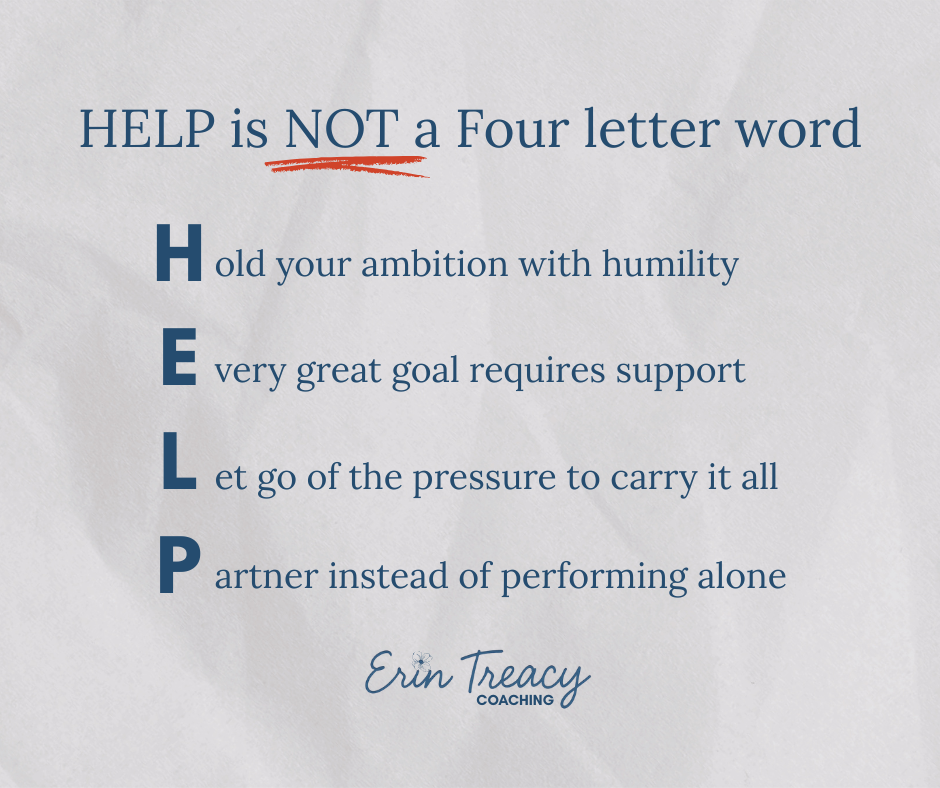
Ambition was never meant to be carried alone.
How to Ask for Help Without Losing Authority at Work
One of the biggest fears professionals carry is this:
If I ask for help, will people question my leadership?
In reality, clarity builds credibility.
You can say:
“I want your input on this.”
“I would like you to own this fully.”
“I am at capacity and need to prioritize well.”
Those statements do not signal weakness.
They signal awareness.
Authority is not built on doing everything yourself.
It is built on creating a team strong enough to execute together.
Building a Stronger Team at Home and at Work
If you want:
Career growth
Leadership influence
Energy for your family
Room for your own goals
You cannot be the entire infrastructure.
Let someone carry the box.
Let a colleague lead the meeting.
Let your partner handle dinner without correction.
Let a friend show up for you.
Practice saying yes in small moments.
When you normalize help early, it feels like partnership.
When you wait until you are overwhelmed, it feels like crisis.
You do not need to prove you can carry everything.
You need to build a system strong enough so you do not have to.
Help is not a four letter word.
It is a capacity strategy.It is a leadership skill.It is a sustainability practice.
Ready to Redefine Strength
If this resonates, it may be time to examine the system you are carrying alone.
You do not need more pressure. You need better structure.
Let’s build a leadership rhythm that allows ambition and steadiness to coexist.
Schedule a clarity conversation and start redefining what strong leadership looks like in this season of your life.
Frequently Asked Questions About Accepting and Asking for Help
Why is it so hard to accept help without feeling weak?
Many high achievers link independence with competence. Accepting help can feel like admitting you cannot handle something alone. In reality, collaboration strengthens leadership. The discomfort usually comes from identity, not inability.
Is accepting help different from asking for help?
Yes. Accepting help is often the first step. If you cannot receive support when it is offered, you are unlikely to request it when you need it. Learning to accept help builds the confidence and trust required to ask for it intentionally.
How do I ask for help at work without losing authority?
Be clear about outcomes and ownership. Say, “I want your perspective on this,” or “I need you to take the lead here.” Strong leaders delegate strategically and communicate expectations clearly. Authority grows when teams feel trusted.
Does asking for help make me look less capable?
No. It signals awareness of your capacity and commitment to quality. Leaders who sustain long term growth build strong teams. Doing everything alone increases burnout and limits effectiveness.
How can I get better at accepting help?
Start small. Say yes when someone offers assistance with everyday tasks. Delegate low risk responsibilities. Practice releasing control in manageable moments. Over time, collaboration will feel natural instead of uncomfortable.
Why does it matter if I accept or ask for help?
Because refusing help increases pressure and isolation. Over time, that leads to resentment, exhaustion, and reduced performance. Accepting and asking for help builds trust, strengthens relationships, and allows you to sustain ambition without burning out. Leadership is not about carrying everything. It is about carrying it well.
