
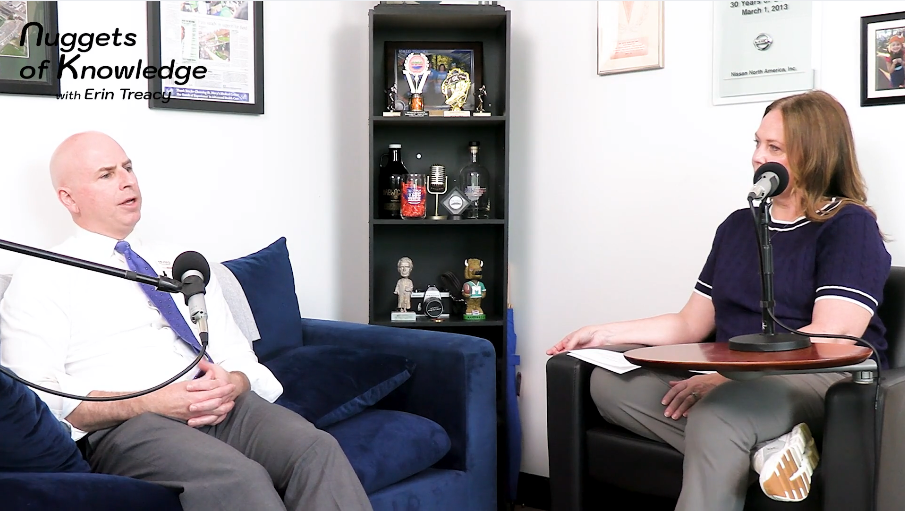
A conversation with Jason Moses about leadership, trust, and the real work of building a team.
At a recent chamber event, Jason Moses and I were talking about the pressure leaders carry right now.
Business owners and managers keep telling me some version of the same thing. They feel pulled away from the “real work” because they are constantly dealing with people issues.
Communication gaps. Missed expectations. Decisions waiting for approval. Conflict no one wants to name. Team members needing clarity, correction or encouragement at the exact moment the business needs momentum.
Jason did not overcomplicate his response.
He said, “The people are the business.”
Jason Moses is the general manager of Moses AutoMall in Huntington, West Virginia, where he has spent more than 20 years leading inside a family business with deep roots in the community. His perspective comes from years of working with people, growing teams and carrying the kind of day-to-day leadership pressure many business owners and managers understand immediately.
“People are everything. If you want to grow, there’s only one way to grow, and that’s to build your team.”
Jason Moses
That is why the line stayed with me.
In so many workplaces, people problems get treated like interruptions. A meeting runs long because someone needs direction. A day gets derailed by a team issue. A plan slows down because a conversation should have happened sooner.
Those moments can feel like distractions from the business.
They are not.
When people serve the customers, solve the problems, make the decisions and carry the reputation of the company, people issues are part of the business. More than that, they are part of the real work of leadership.
Watch the full conversation below.
Jason has spent more than two decades leading inside a family business. His perspective did not sound polished for effect. It sounded earned.
Why People-First Leadership Builds Stronger Teams
“If you want to grow,” he said, “there’s only one way to grow, and that’s to build your team.”
Not every leader agrees with that sentence.
Some see people as the problem getting in the way of growth.
Jason sees it differently.
People are not in the way of the business. People are how the business moves.
Team development sounds good until someone makes a decision you would not have made. The idea feels right until the work slows down because someone is learning.
Then instinct takes over. Step in. Fix the problem. Move the day along.
The urge to step in often comes from a good place.
Many leaders were promoted or trusted because they could execute. They solved problems, handled pressure, knew what needed to happen before anyone else saw it coming.
Over time, the strength can become a trap.
When one person fixes everything, the business starts depending on one person’s judgment. The team stays busy, but confidence does not always grow. People wait. They check. They ask before deciding. Eventually, the leader becomes the center of too many decisions.
Growth needs a different rhythm.
Jason described himself as someone who listens, gathers information and moves with intention. He even compared his leadership style to a turtle.
Slow is not weak.
Careful is not passive.
Steady leaders often see more because they are not rushing to prove they have the answer first.
Recent research supports the business side of Jason’s point.
McKinsey’s 2024 research on team effectiveness found healthier team behaviors are connected to stronger productivity, innovation and stakeholder outcomes. The research looked at team health through the way people align, execute, renew and interact with one another.
In plain language, the way people work together affects how well the business performs.
Jason’s point lands there.
You cannot build a stronger business while treating people issues like interruptions. Communication, trust, decision-making and accountability are not separate from the work. They are part of how the work gets done.
In plain language, a team works better when people can think together.
Jason’s point lands right there.
You cannot build a strong team if only one person is allowed to think.
One of the strongest parts of our conversation came when we talked about mistakes. Every leader knows the tension. You see a team member moving toward a decision. Something about it feels off. Your experience tells you the outcome may not go well.
The urge to step in can be powerful.
Sometimes stepping in is the right move. A leader still has a responsibility to protect the customer, the business and the people involved.
But not every mistake carries the same risk.
Some mistakes are survivable. Others are correctable. A few become the exact lesson a person needs before better judgment begins to form.
Jason said leaders have to look at those moments as an investment.
That word matters.
An investment has a cost. It also carries the possibility of return.
When a team member makes a decision, sees the result and talks through what happened, the business may pay a short-term price. The return can be confidence, ownership and stronger decision-making in the future.
This does not mean people are left alone to figure everything out.
Guided learning requires structure. Expectations need to be clear before the work begins. Risk needs to be understood. Follow-up needs to happen after the outcome, especially when the result is not what everyone hoped for.
This is where people-first leadership in real workplaces matters. It is not soft, passive or a free pass around accountability.
It gives people enough clarity to learn, enough trust to try and enough follow-up to grow from what happened.
There is a difference.
A manager can correct without humiliating. The business owner can ask questions before assuming the worst. Team leads can talk through a mistake without turning it into a character flaw.
The small conversations matter.
People learn what happens when they bring bad news. They notice whether questions are welcome. They decide whether mistakes should be hidden or discussed. Over time, those moments shape the culture more than any framed value statement.
When questions start to feel unsafe, trust breaks down quietly. I wrote more about that in this article on psychological safety at work.
When businesses say they want ownership, the environment has to make ownership possible.
Learning sticks when the structure is clear. People need to know what is expected before the work begins, what support is available while they are doing it and how the outcome will be reviewed afterward. The hard part for many leaders is allowing the lesson to take the time it needs, especially when discomfort shows up.
Most leaders do not step in because they are trying to control every move.
Often, they step in because the stakes feel personal.
The customer experience matters. So does the team, the reputation of the business and the company they have worked hard to build. When all of it feels connected, taking over can look like care in the moment.
Still, care without trust can create dependence.
A better question is not, “How do I prevent every mistake?”
A stronger question sounds more like this: “What level of risk can this person carry so learning can happen without putting the business in danger?”
A question like this moves leadership from control to development.
The goal is no longer to rescue every decision or answer every question before someone has time to think. The goal becomes building judgment, creating clarity and developing people who can carry more of the work with confidence.
Jason put it plainly when we talked about letting people learn through mistakes.
“You have to look at it as an investment. You don’t want to let them make a catastrophic mistake that puts you under, but if you can afford that mistake, it’s an investment in their learning.”
Jason Moses
This is where the leadership lesson lands.
Real leadership is not proven by stepping into every moment before it gets uncomfortable. It shows up when the risk is understood, the guardrails are clear and the leader allows someone to learn without being abandoned.
The people are the business.
Growth moves through the people who answer the questions, serve the customers, solve the problems and carry the work forward.
Operations do not run around them. Operations run through them.
Once leaders stop treating people issues like interruptions, the work changes. Conversations become strategy. Trust becomes execution. Team development becomes growth.
Businesses cannot afford to ignore that work.
Watch the full Nuggets of Knowledge conversation with Jason Moses here:
Learn more about Moses AutoMall of Huntington:
https://www.mosesmeansmore.com
Learn more about Erin Treacy Coaching:
https://erintreacycoaching.com
