

The meeting was supposed to create alignment.
A leader rolled out a new plan. People listened, took notes and tried to understand what would change. Then came the practical questions.
Nothing dramatic or disrespectful.
Just people trying to make sure they understood the expectation, the process and their part in the work.
Later in the day, an executive email landed.
Leadership called employees unprofessional. Rude. Out of line.
Now the conversation had moved to another level.
Leadership turned clarification into a character issue. A chance to build understanding had turned into a warning to stay quiet.
This is how psychological safety at work begins to break down.

What psychological safety at work really means
Psychological safety at work means people can ask questions, admit confusion, raise concerns and offer ideas without fear of being embarrassed, punished or labeled as the problem.
Psychological safety does not mean everyone agrees, and it does not remove accountability. Leaders still make decisions and set direction. The difference is people can ask questions or raise concerns without becoming the problem.
The point is not to avoid hard conversations. The point is to create enough trust so people can be honest before small problems grow into larger ones. That is where people-first leadership becomes practical, not just a value statement.
Leaders cannot solve what people are afraid to say out loud. Employees hide confusion when they believe leaders will use questions against them. Ownership also becomes harder because people cannot fully own work they do not feel safe enough to clarify.
The American Psychological Association’s 2024 Work in America survey found a clear connection between psychological safety and stronger workplace experiences, including belonging, job satisfaction, relationships at work and overall well-being.
For leaders, the takeaway is simple: When people do not feel safe speaking honestly, the workplace loses more than conversation. It loses trust, clarity and engagement.
People closest to the work often see problems before leadership does. When they stop speaking, the organization loses one of its most valuable sources of truth.
“People cannot take ownership of work they do not feel safe enough to clarify.”
Erin Treacy
The question is not the problem. The reaction is.
Most employees are not trying to embarrass leadership when they ask for clarification. They want to reduce mistakes, understand expectations and do the work well. A clear answer gives them a better chance of getting it right the first time.
A question like, “Can you explain how this will work?” may sound simple to the person asking it. A leader under pressure may hear something very different.
Maybe they hear:
“You did not explain this well.”
“We do not trust your decision.”
“You are not leading well.”
Those are not the same message.
Once leaders start assigning motive instead of seeking meaning, communication becomes risky. The employee asked for understanding. Leadership heard criticism.
This difference matters because it changes what people do next time.
When clarification gets treated like disrespect
Clarification is not disrespect or automatic pushback. It’s also not proof of a bad attitude.
Often, clarification is the clearest sign someone wants to do the work correctly.
Some leaders struggle to hear it this way, especially when stress is high, decisions are moving fast or they already feel questioned from above. Under pressure, a practical question can start to feel personal.
A team member asks how success will be measured, and the leader responds as though the plan is being challenged. Someone sends a follow-up email asking for next steps, and leadership reads the message as attitude. A person names a concern early, and leadership frames the concern as negativity.
The question may be reasonable. The reaction changes the meaning.
In the leader’s mind, the person is no longer asking for clarity. They are being difficult.
This is where psychological safety at work becomes practical. It is not a poster, slogan or culture statement. It is what happens in the moment after someone asks a reasonable question.
Does leadership open the conversation, or does leadership punish the person for bringing questions into the room?
CDC published research describes psychological safety climate as the shared perception people will not be punished or rejected for speaking up. The same source connects this climate to how people experience fairness and inclusion at work.
Silence is not alignment
Quiet teams can fool leaders.
No pushback doesn’t mean no concerns. Just because the team has no questions doesn’t mean leadership is communicating effectively.
From the outside, this may look like agreement. Inside the team, something else may be happening.
People may be confused but cautious. They may have learned their questions will be judged. Some may be protecting themselves from being labeled negative, rude or difficult.
Silence is not always alignment. Sometimes it is self-protection.
When speaking up at work starts to feel risky, silence becomes the safer choice.
Employees pay close attention to leadership reactions. They notice when a reasonable question gets dismissed. The team will remember when a concern gets labeled as negativity. People watch when a leader sends a frustrated message after a meeting and frames the group as rude or unprofessional.
Over time, people adjust.
Clarification happens less often before the work starts. Gaps in the plan stay hidden longer. Concerns get raised privately instead of in the room where they belong. People wait to see who else will speak first.
Some leaders mistake this for maturity or professionalism.
Often, it is learned silence.
The organization then pays for it through confusion, rework, missed expectations and quiet resentment. In my work, I have seen how poor communication can cost leaders time, trust and engagement.
“A quiet team may not be aligned. It may be protecting itself.”
Erin Treacy
Psychological safety at work affects performance
Psychological safety at work is not a soft issue. It affects how work gets done.
When questions feel unsafe, teams waste energy trying to interpret leadership instead of moving the work forward. People start weighing the risk of asking a question against the risk of getting the work wrong.
A question can start to feel risky. Employees may worry they will look difficult or wonder whether the concern will be used against them later. Silence can feel easier, even when the work would benefit from clarification.
That mental load slows people down. It also creates avoidable errors because people guess instead of confirming what needs to happen.
Workplace communication becomes more fragile when leaders assume understanding instead of checking for it. A plan may seem clear in the meeting, but gaps show up once people start doing the work.
Deadlines slip. Expectations get missed. People duplicate effort. Important concerns surface too late. Those patterns often show up later as team accountability issues, even when the root problem is unclear communication.
Research published in Social Behavior and Personality found employees who perceived psychological safety were more likely to use their voice at work, and employee voice promoted work engagement.
The business case is simple. People participate more fully when they believe their voice is safe.
Better leaders know the difference between clarification and resistance
Leaders do not need to treat every question the same way.
Some questions seek clarification. Others raise concerns, challenge a decision or reveal resistance. The mistake happens when leadership hears all of them as disrespect.
When disagreement is still part of understanding
An employee can say, “I do not agree with this,” and still be trying to understand. They may see a risk the leader missed, or they may be naming a disconnect between the plan and the day-to-day work. In some cases, they simply do not understand the reason behind the decision yet.
Yes, they may also be disrupting the conversation.
The leader still has a choice in how to respond.
Leadership is not shame or call out the whole room later in an email. A strong response gets curious enough to find out what is really happening.
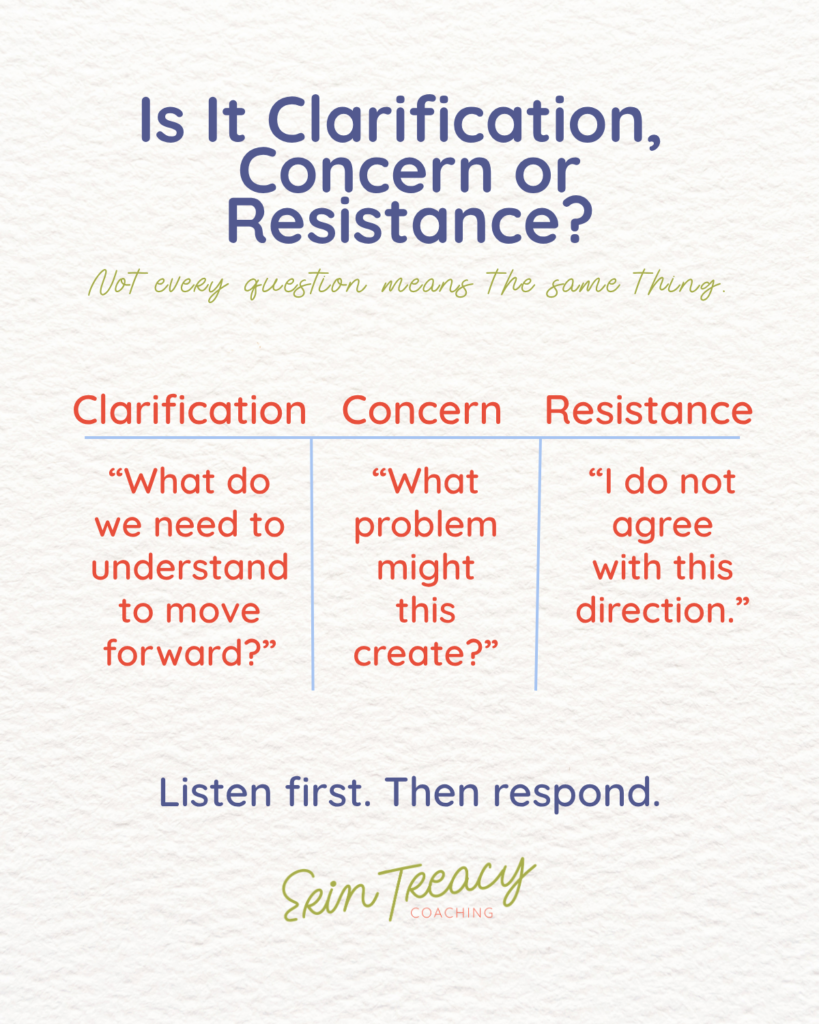
Clarification asks, “What do we need to understand to move forward?”
Concern asks, “What problem might this create?”
Resistance says, “I do not agree with this direction.”
All three deserve attention, but they do not require the same response.
Questions leaders can ask before reacting
When someone pushes back, the leader’s first move should be to seek more clarity.
“Is there a specific part not lining up for you?”
“Where do you see the biggest concern?”
“Is this a question about the decision, the process or the impact?”
“What information would make this clearer?”
“Is there something you are seeing from your role we may need to consider?”
Those questions keep the conversation open without giving up leadership authority.
If a person is raising a valid concern, the leader now has useful information. An effective leader turns confusion in clarity. If someone is being disruptive, the leader has more context and can address the behavior directly in a smaller conversation instead of turning the entire room into the problem.
A leader who treats every question or disagreement as resistance create people who start checking out.
People stop listening for understanding because the room no longer feels safe. They stop working through the project with honesty. Gaps in the plan stay hidden. Follow-through becomes weaker because clarity was never built.
Over time, the damage spreads. Communication breaks down between leaders and employees, then across the team itself. People start working around each other instead of with each other. In the worst cases, they work against each other because trust has been replaced with caution, resentment and self-protection.
Leadership communication gets stronger when leaders stay steady enough to hear what is underneath the question.
Leaders do not lose credibility when they seek clarity. They lose credibility when they punish people for needing it.
How leaders can make questions safer
A leader’s first response teaches the team what is safe.
Defensiveness sends people backward. Curiosity keeps people engaged.
This does not mean leaders need to entertain every debate or explain every decision endlessly. Leadership still requires direction, standards and accountability. The difference is tone and purpose.
Control says, “Stop questioning me.”
Clarity says, “Let’s make sure we understand what needs to happen.”
A people-first workplace does not avoid hard conversations. It handles them without turning employees into the problem, which is one reason leadership and management coaching can be useful when communication patterns keep breaking down.
Even in formal workplace safety guidance, OSHA states workers can speak up or report safety concerns without being punished or treated unfairly. The principle matters beyond safety complaints. Healthy workplaces need people to raise concerns before problems grow.
1. Pause before assigning motive
Before reacting, ask yourself one question:
Is this person challenging me, or trying to understand the work?
A short pause can keep a normal question from becoming a conflict.
2. Respond to the words, not the tone you imagine
Email and text are easy places to misread tone.
A short message can feel sharp when the reader is already stressed. A direct question can sound like criticism if the leader is feeling defensive.
Respond to what the person actually asked.
If tone needs attention, handle it privately and with care.
3. Thank people for naming confusion
Confusion exists whether people name it or not.
A question gives leaders a chance to fix it before it becomes a mistake. One useful response is simple: “I am glad you asked. Others may have been wondering the same thing.”
4. Clarify expectations in writing
After a meeting, send a clear recap.
Include who owns what, what has changed, what success looks like, which deadline matters and where questions should go.
Written clarity moves communication from assumption to shared understanding.
5. Watch what happens after someone speaks up
The room will tell you a lot.
Do people lean in or shut down? Does the conversation open or tighten? Does leadership treat the person differently later?
Those signs reveal more about culture than a slogan ever will.
“Leaders do not lose credibility when they clarify. They lose credibility when they punish people for needing clarity.”
Erin Treacy
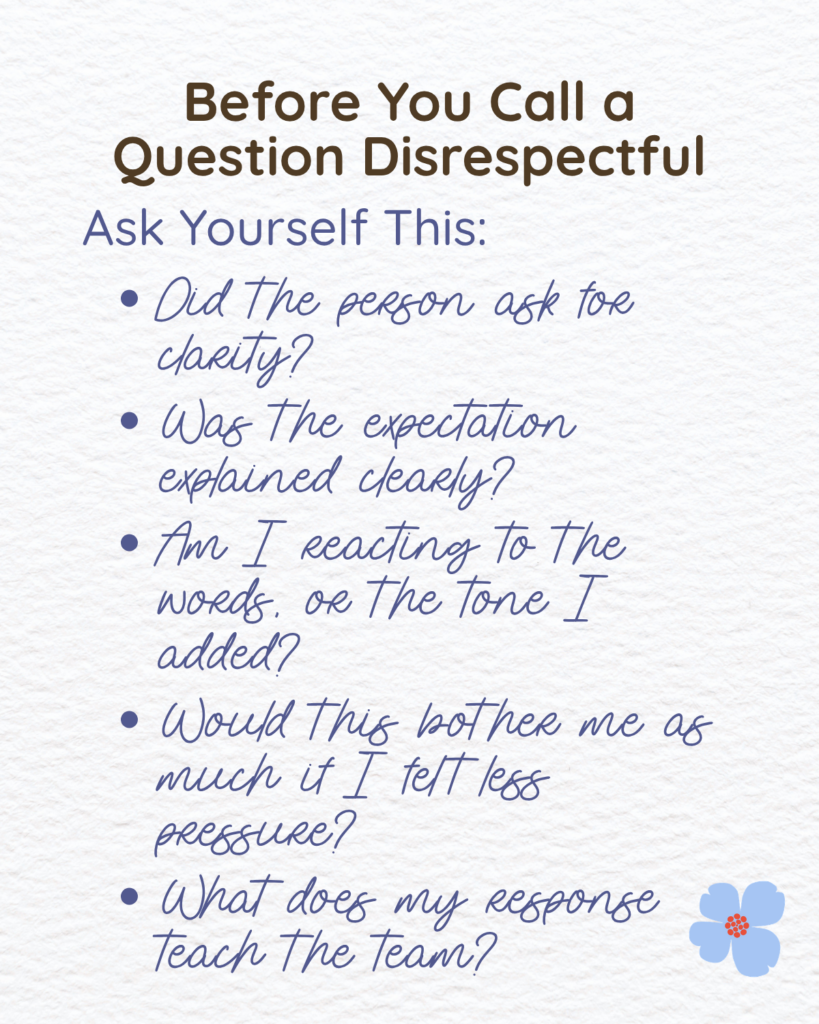
Before you call a question disrespectful, ask this
Before calling a question rude, unprofessional or out of line, slow down.
Consider what actually happened. Did the person ask for clarity? Was the expectation explained well enough? Are you reacting to the words in front of you, or to the tone you added? Would the question bother you as much if you felt less pressure? What does your response teach the rest of the team?
Those questions matter because psychological safety at work is built or broken in ordinary moments.
Psychological safety at work is built or broken in ordinary moments, including the meeting after a new plan is shared, the follow-up email asking for clarity, the Slack message naming confusion, the hallway conversation after tension rises, and the leader’s response when someone says, “I am not sure I understand.”
This is where culture becomes real.
Three key takeaways for leaders
Questions usually signal engagement, not disrespect.
A person asking for clarity is often trying to do the job well. Treat the question as useful information before you assume bad intent.
Silence can be a warning sign.
Quiet teams may look cooperative, but silence can hide confusion, fear or disengagement.
Leaders create the conditions for communication.
The way leaders respond to questions teaches people what is safe to say next time.
FAQ: Psychological safety at work and leadership communication
Psychological safety at work means people can ask questions, share concerns, admit confusion and offer ideas without fear of punishment or embarrassment. It does not remove accountability. It creates enough trust for honest communication.
Employees often stop asking questions when clarification gets judged, dismissed or treated like disrespect. Over time, silence can feel safer than speaking up.
Psychological safety affects workplace communication because people need to feel safe enough to ask for clarity before problems grow. Without it, teams often guess, withhold concerns or wait for someone else to speak first.
Yes. Psychological safety and accountability belong together. Clear expectations, respectful questions and honest feedback make accountability stronger because people understand what is expected and can speak up when something is unclear.
One sign is a quiet team. If people rarely ask questions, avoid raising concerns or only speak privately after meetings, they may not feel safe being honest in the room.
Closing thought
The most dangerous workplaces are not always loud or openly chaotic.
Sometimes they are quiet.
Concerns stay hidden, questions stop coming, confusion goes unchallenged, and honest communication quietly disappears.
At first glance, leaders may mistake silence for alignment. In reality, silence often means the workplace stopped feeling safe enough for real communication.
People-first leadership does not mean avoiding hard conversations. It means building enough trust, clarity and consistency so people can speak before problems grow.
If your team has grown quiet, reactive or hesitant to ask questions, start with what happens after someone asks for clarification. The answer will tell you a lot about the culture.
If communication feels strained inside your team, this may be a good time to look at the patterns underneath the work. A people-first leadership conversation can give you a clearer place to begin.
