

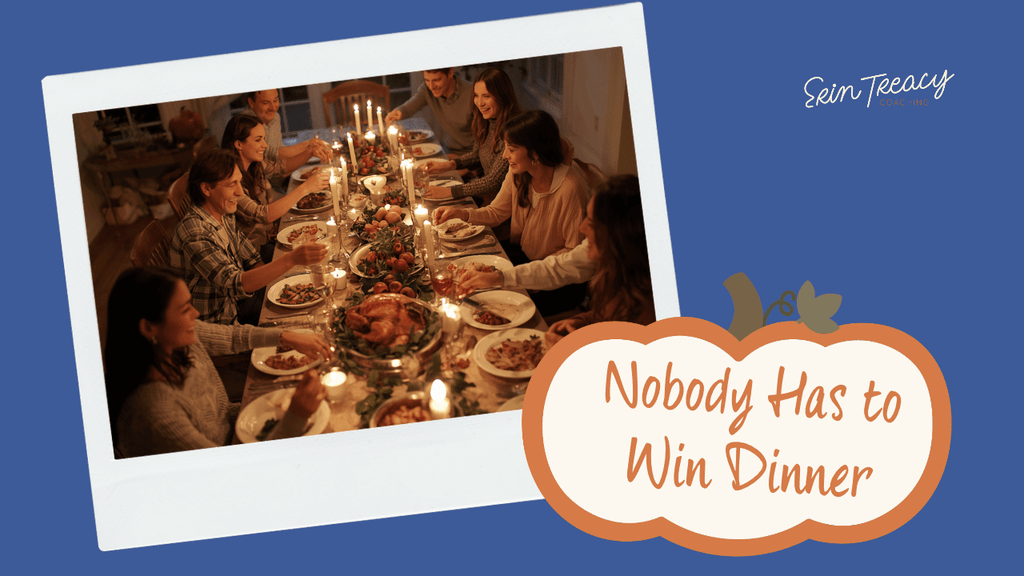
With five kids, a blended family and now two sons in law, getting everyone in one place is a challenge. It doesn’t happen often. Every holiday comes with a puzzle: whose house, which day and how to get to all of it without disappointing anyone.
Last year, one of my daughters called to say she and her husband had planned a vacation over Thanksgiving. They weren’t coming home.
Was I disappointed? Of course. Was I excited for the trip they planned? Of course. It felt a little strange not to see them at the table. By Christmas, they had a great trip to tell us all about.
I’ve told my kids they have to build their lives together, holiday or not. If I want as many of them home as possible, I have to be flexible. My rule as a parent has become simple. I want to be the place where they show up and relax.
So we blended our traditions the same way we blended our family. Our Christmas comes last, on purpose. By the time everyone reaches us, they’ve already eaten several Christmas dinners. We serve a full Christmas breakfast at 7 or 8 p.m., pajamas fully endorsed. Then come the games. We’re a highly competitive bunch, and money is fully on the line. It’s one of the best nights of the year.
Telling your family you won’t be home is one kind of hard holiday conversation. Plenty of others wait at Friendsgiving, the office potluck, the family group chat and the phone call with Grandma. With the election still fresh, many people will walk into Thanksgiving already braced for one.
Getting through the day doesn’t require picking a side or sitting there and taking it. The skill is stepping around a conversation without stepping away from the people.
You’re Not the Only One Dreading It
If your stomach tightens at the thought of politics over pie, you have company. After the 2024 election, a Harris Poll for the American Psychological Association found 72% of U.S. adults hoped to avoid political talk with family over the holidays. Younger adults felt it most. Among adults 18 to 34, 45% planned to skip family members they disagree with, compared with 23% of people 65 and older.
Those numbers come from 2024. No one has published a survey since this year’s election, but the feeling hasn’t gone anywhere.
You can walk in with a plan. Start with how a good server works a busy room.
Nobody Has to Win Dinner
I spent years owning and running restaurant franchises. A good server doesn’t argue with a table about the menu. They listen, refill the water and keep the night moving.
The same mindset works at a holiday table. You aren’t there to win the conversation. You’re there to keep the people.
1. Be a Good Guest or Host Before Hard Holiday Conversations Start
Good conversation starts before anyone sits down. Guests and hosts both set the tone.
If you’re a guest: Your part is keeping the peace. If you know a topic pokes at someone in the room, leave it at home. Share about your life instead, like a funny moment from work or an adventure you’re planning for next year. The host has enough to do without monitoring conversations. If a conversation starts heading somewhere you’d rather not go, offer to help in the other room. Refilling the rolls or starting the dishes is a graceful way out.
If you’re hosting: Hand out jobs. One person carves, one pours drinks, one keeps an eye on the kids. Busy hands leave less room for a debate.
Worried a conversation could get away from you? Make a seating chart. Family members who see things very differently don’t have to sit side by side.
I’ve also assigned a watcher. A watcher sits near the person most likely to stir things up and jumps in fast with a funny story or a new topic. It keeps the table from drifting somewhere you don’t want it to go.
The next day, send a thank you text. It takes 30 seconds, and people remember it. I wrote more about why in The Power of Thank You in Work and Life.
Try saying: “What can I carry?” or “Thanks for having us. Dinner was so good.”
2. Listen First
Let people finish, even when you can see where the sentence is headed. Then repeat back what you heard.
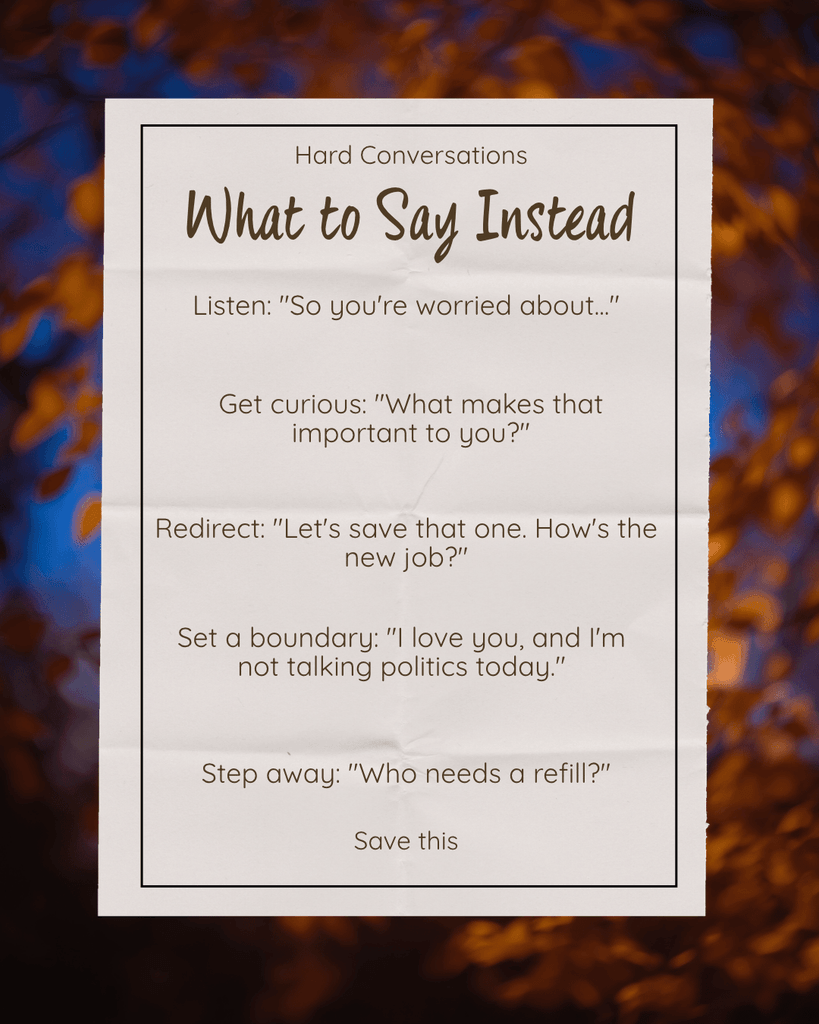
“So you’re worried about what this means for your job.”
You haven’t agreed with anything. Understanding someone isn’t the same as agreeing with them. Most people soften once they feel heard.
3. Get Curious Instead of Defensive
When a comment stings, ask a question instead of firing back.
Try saying: “What makes that important to you?” or “How did you come to see it that way?”
Curiosity slows the whole table down. It also tends to uncover the worry under the opinion, like a grocery bill, a job or a grandchild. For more on seeing a conversation from the other chair, read Perception Is Reality.
4. Let It Roll Off
Some comments are bait. Learn to spot the hook before you bite.
Notice the jab. Take one slow breath before you answer. Remind yourself a comment often says more about the speaker’s worries than about you.
Then ask yourself one question: Do I want the point, or do I want the relationship? Most days, the relationship wins.
Not every comment needs a response, especially at the holidays. Letting one go doesn’t mean you agree. It means you’re growing.
5. Redirect With Grace
A good server steers a table toward the specials without anyone noticing. You can steer a conversation the same way.
Try saying: “I’d love to hear about your trip.” Or: “Let’s save that one for another day. How’s the new job?”
Pulling someone else in works, too. Ask a cousin about the new puppy or the kids about school. A fresh voice changes the energy fast.
6. Set a Kind Boundary During Hard Holiday Conversations
Sometimes a redirect isn’t enough. If you want to avoid politics at Thanksgiving altogether and someone keeps circling back, say it plainly.
“I love you, and I’m not going to talk politics today.”
Say it once, calmly. Then change the subject. Skip the long explanation, and don’t repeat it five times. Calm and kind is hard to argue with.
7. Know When to Step Away
Refill drinks. Take out the trash. Walk the dog.
Leaving a conversation isn’t rude. Leaving it angry is what people remember.
8. When Hard Holiday Conversations Happen From a Distance
Not everyone goes home for the holidays. Some people work, some can’t afford the trip and some celebrate with friends instead. The season can feel quiet. In a 2025 American Psychiatric Association poll, nearly 1 in 3 adults said they worry about being lonely over the holidays. If that sounds familiar, making friends as an adult is worth the effort, and it starts small.
If you’re the one not going home, say so early. Yes, people will be disappointed. The sooner you make clear what’s possible, the sooner the stress comes off everyone. Waiting until the last minute comes across as rude, especially when you booked the plane tickets weeks ago.
Hosting a smaller table this year? An empty chair isn’t a comment on you or your family. Flexibility is what gets more people home, maybe just on a different day.
Distance doesn’t cancel the hard conversations. They just move to the group chat or the video call, and the same manners apply.
- You don’t have to answer right away. A heated message can wait until you’ve cooled off.
- Mute the thread without leaving the family. Muting protects your peace and keeps the door open.
- Keep a calm exit line handy: “Love you all. I’m going to sit this one out.”
The same goes for social media. Someone one of my daughters knows recently posted something she strongly disagreed with. She debated whether to respond and asked me what I thought.
First, a comment on social media isn’t going to change anything. If you know the person well, a real conversation might help you understand each other. If they’re outside your inner circle, let it go.
Second, simply say thank you. She was floored. Why would she thank them? Because now she knows who they are. Thank you for showing me what you believe. With that, she gets to decide how much time and thought to give them.
With family, it’s a little harder, but I still say it: Thank you. I’ve clocked your thoughts.
9. What to Do Afterward
If something went sideways, reach out privately. Never correct someone in front of everyone.
A short text mends more than you’d think: “I’m glad we got to see each other.”
The Relationship Matters More Than the Argument
Nobody wins Thanksgiving. The people at your table this year are worth more than any point you could make there.
These same skills work on Monday morning, too. Listening first, getting curious and setting kind boundaries are durable skills every workplace needs, and they sit at the heart of my workshops and coaching. If you want help building them for yourself or your team, book a conversation with me.
FAQ
Have a plan before you sit down. Keep a few redirect lines ready, like “Let’s save that one for another day. How’s the new job?” If someone keeps pushing, set one kind boundary: “I love you, and I’m not going to talk politics today.” Then change the subject and stick with it.
You don’t owe anyone an answer. A light, friendly line works best: “I keep my ballot to myself, but I’d love to hear about your trip.” Say it with a smile, then move the conversation somewhere new. Calm and kind is hard to argue with, and most people let it go.
No. Stepping away to refill drinks, take out the trash or walk the dog gives everyone a breather. Leaving a conversation isn’t rude. Leaving it angry is what people remember. If something did go sideways, reach out privately the next day and say you’re glad you got to see each other.
You don’t have to answer right away. Let a heated message sit until you’ve cooled off, and mute the thread if you need a break without leaving the family. A short exit line helps: “Love you all. I’m going to sit this one out.” Same manners, different table.
Tell them early. Yes, they’ll be disappointed, but the sooner you make clear what’s possible, the sooner the stress comes off everyone. Offer another day to celebrate if you can. Waiting until the last minute feels rude, especially when you booked the trip weeks ago.
