

What is Quiet Cracking?
Quiet cracking describes persistent disengagement without the dramatic exit. It’s when motivation, creativity, and energy erode over time, even though performance appears stable.
As NPR explained when defining “quiet quitting,” this movement “doesn’t actually involve quitting. Instead, it’s a response to hustle culture and burnout.” Quiet cracking takes that one step further; people aren’t just pulling back; they’re breaking down quietly while still trying to hold it together.
It’s the silent shift from doing with purpose to just doing.
The Numbers Behind the Fade
-
U.S. employee engagement has dropped to 31 percent in 2024, the lowest level recorded in a decade. Forbes
-
Actively disengaged workers now represent 17 percent of the workforce. Forbes
-
One figure to carry: 91 percent of employees who receive meaningful recognition at least monthly say they’re very engaged. Achievers
These numbers point to a dangerous trend: even when people still “do the work,” many are doing it without passion or purpose.
How Quiet Cracking Shows Up
Quiet cracking rarely announces itself. It doesn’t come with dramatic resignations or open conflict. It slips quietly into the day-to-day rhythm of work. The signs are easy to miss because they look like normal behavior, just a little more subdued, a little less alive.
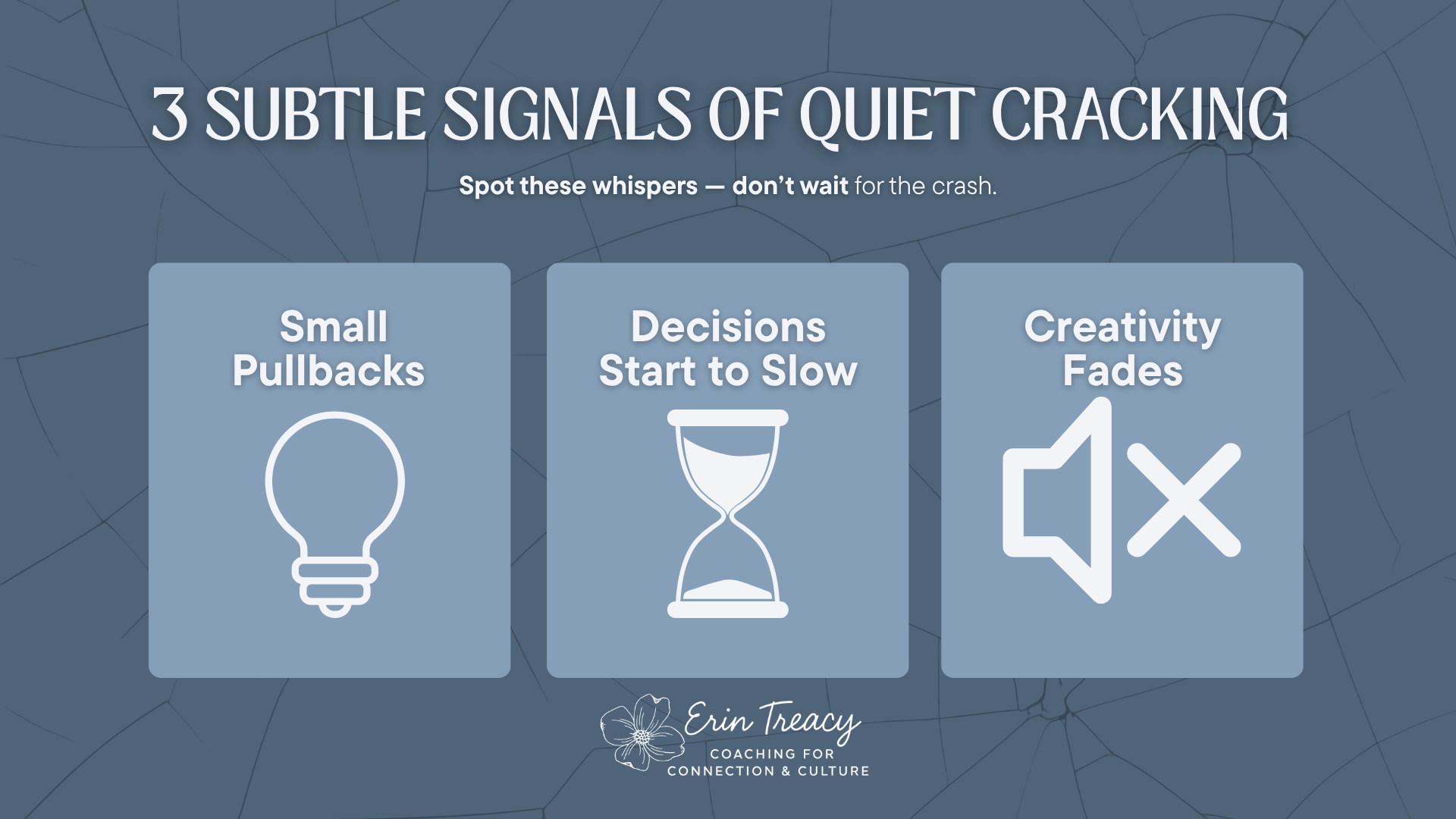
It often begins with small pullbacks. The person who once jumped at chances to help doesn’t stop caring; they just stop volunteering. They’ll still do the work when asked, but the spark that made them proactive is gone. What used to be energy and initiative becomes quiet compliance. You might notice their name showing up on fewer ideas, fewer cross-team efforts, or fewer “I’ll take that” moments. On the surface, everything still looks fine, but something underneath has shifted.
Decisions start to slow, too. Someone who once made confident calls now hesitates, asks for more clarification, or needs approval for things they used to handle easily. It’s not because they forgot how; it’s because they’ve lost trust in how their choices will land. When a person begins second-guessing every move, it’s often a sign they’ve stopped feeling safe to take risks.
Then creativity fades. Meetings that once sparked discussion now feel flat. The same people speak up while others nod along. New ideas sound safe, familiar, or recycled. Innovation didn’t disappear; people have started protecting themselves from disappointment. They share less because they expect less to change.
Quiet cracking shows up in subtle ways, in the slower rhythm of someone who’s no longer leaning in. You won’t see it in the numbers. You’ll feel it in the silence, in the pauses. Depending on how in tune a leader is with team members, they may not notice at all.
Why It Starts
Quiet cracking doesn’t happen overnight. It builds quietly, often in people who care deeply about their work. It starts with a simple misalignment — when the work someone does no longer connects to what they value most. Maybe a project once felt meaningful, but now it’s buried under red tape or constant change. That gap between effort and purpose begins to grow.
Then comes the overload. The pace quickens, the priorities multiply, and people begin to feel like they’re sprinting uphill with no finish line. They keep saying yes because they’ve always said yes. Eventually, the weight starts to show in small ways — shorter answers, slower smiles, and a tired kind of humor that covers frustration.
Recognition often fades too. The extra effort that once earned a thank-you starts to feel invisible. Leaders get busy, and appreciation gets pushed to the background. Without it, people begin to wonder if what they do really matters or if anyone would notice if they stopped trying so hard.
And then there’s the quiet confusion that settles in when roles or expectations shift but no one talks about it. People start guessing what’s expected instead of knowing. They lose confidence in where they stand. The result is a subtle withdrawal, not out of defiance, but self-protection. It’s easier to play it safe than risk doing more and being misunderstood again.
The irony is quiet cracking often happens to the most dependable people, the ones who never wanted to let anyone down. They don’t walk out in frustration. They stay, but they stop bringing their full selves.
What you see on the surface is steady performance. What’s underneath is a slow erosion of connection and trust.
A Story That Stays With Me
A manager I once worked with described one of their top performers as an overachiever. Someone full of ideas, always first to volunteer, and sometimes, in their words, “a little hard to manage.” Over time, the same employee stopped jumping into new projects. They quit sharing creative ideas before they ever reached the planning stage. They still met every deadline and still showed up, but something in their energy had shifted. They weren’t leading anymore; they were following.
The manager noticed the change and seemed relieved. They pointed to the employee with pride one day and said, “I finally broke them in. They get it now.” To them, it looked like growth, someone learning to fall in line. But what had really happened was a quiet breaking.
The spark that once drove innovation and collaboration had dimmed. The creative flow slowed, the open exchange of ideas closed off, and trust quietly left the room. The manager hadn’t shaped a stronger team member; they’d simply trained the initiative out of someone who cared.
It’s a moment I’ve never forgotten because it shows how easily leaders can mistake compliance for progress. You can meet goals and still lose your people in the process.
One Simple Practice You Can Try Right Now
Connection doesn’t take an hour-long meeting or a complicated strategy. It begins with a short, five-minute check-in that focuses on energy and outcomes, not tasks or metrics. When leaders take a few minutes to pause and genuinely listen, it can reset an entire week.
Here’s what it looks like in practice:
1. Start with curiosity
Ask one question that opens the door to how your team member is really doing. It might sound like, “How’s your energy this week?” or “What’s been weighing on you lately?” This isn’t about performance; it’s about people. You’re not digging for problems; you’re looking for signs of fatigue, excitement, or imbalance to guide your next step.
2. Listen without fixing
This is the hardest part for most leaders. When someone shares a frustration, the instinct is to jump in with solutions. But listening without rushing to fix shows respect and trust. It tells your employee, “You don’t have to edit how you feel before talking to me.” Sometimes the act of being heard is the reset they need.
3. Identify one small revision
After the conversation, take one small action. Reassign a task, remove a blocker, or clarify a confusing priority. Small changes done consistently build credibility faster than big announcements. When people see that your check-ins lead to real shifts, even tiny ones, they start to believe those conversations matter.
The entire exchange can fit into a five-minute window. You can do it while walking to a meeting or over a quick coffee. The point isn’t the time; it’s the intention. A short, human moment of curiosity often has more impact than a long, scripted meeting.
Why It Works
Quiet cracking grows in silence. It begins to heal in connection. This simple rhythm of ask, listen, adjust, turns everyday moments into opportunities to build trust. When people feel seen, they don’t just work harder; they care harder.
Call to Action
Are you quietly quitting your job? As a leader, are you mistaking compliance for progress? Share below or reply to this newsletter. Let’s turn the whisper into clarity together. Book your 1:1 clarity session now.
The Path Forward
To combat quiet cracking, it’s essential to foster a culture of open communication. Encourage your team to share their thoughts and feelings. Create an environment where feedback is welcomed and appreciated. This can help bridge the gap between compliance and genuine engagement.
Building a Thriving Workplace Culture
Investing in your team’s well-being is crucial. Consider implementing regular team-building activities or workshops that focus on personal and professional growth. These initiatives can reignite passion and purpose, leading to a more vibrant workplace.
Conclusion
Quiet cracking is a silent threat to workplace culture. By recognizing its signs and taking proactive steps, we can create an environment where everyone feels valued and engaged. Let’s work together to build a thriving, people-focused culture that empowers individuals and enhances team performance.
