

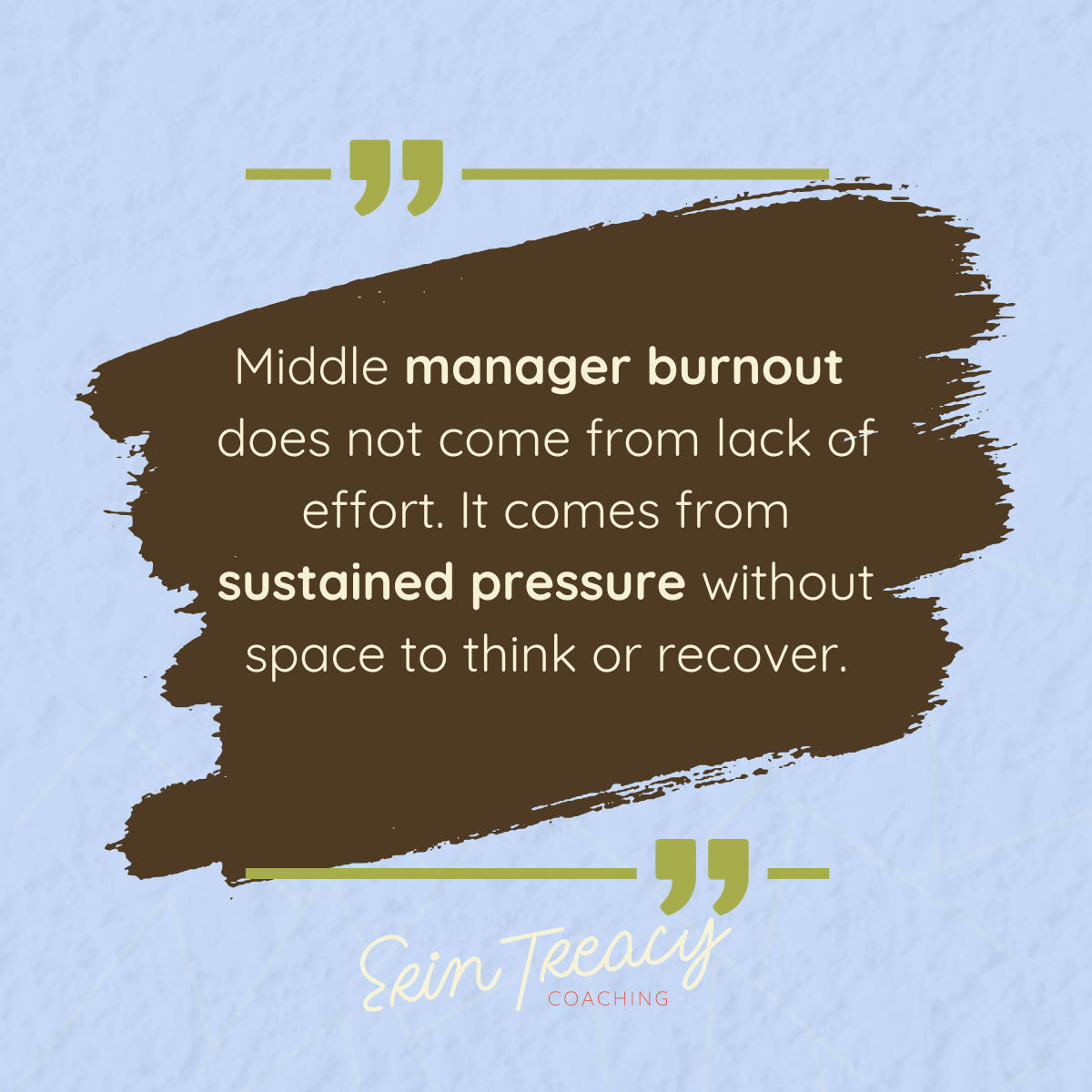
Middle manager burnout is not about time management. It comes from a workload that never slows down
It’s 12:47 PM.
You realize you haven’t eaten.
Your coffee is cold.
You’ve answered six “quick questions,” jumped into two unplanned calls, and your actual work hasn’t even started.
Your calendar looks full.
Your to-do list keeps growing.
And somehow, you still feel behind.
Middle manager burnout often starts long before people recognize it.
If you’re a middle manager, this isn’t a bad day.
It’s a normal one.
The Role That Lives in the Middle of Everything
Middle managers sit in one of the most complex roles inside an organization.
You are expected to:
-
Execute leadership’s strategy
-
Support and develop your team
-
Deliver results on tight timelines
-
Solve problems before they escalate
You are the connector.
The translator.
The one people go to when something breaks.
And most of the time, you are doing it without full control over your time, priorities, or resources.
This is where the squeeze happens.
The Middle Manager Burnout Problem No One Talks About
Most advice focuses on personal discipline.
Manage your time better.
Set boundaries.
Take care of yourself.
But here’s the reality.
When expectations exceed capacity, no amount of time management fixes the problem.
Research supports this.
Gallup research shows managers report higher levels of stress and burnout than individual contributors, largely due to role pressure and competing demands.
A LinkedIn Workforce Confidence survey found nearly 70 percent of employees would leave a job because of a bad manager, while many managers themselves report feeling unsupported and overwhelmed.
This isn’t about capability.
It’s about load.
Why You Keep Saying Yes Even When You Shouldn’t
You already know your plate is full.
So why do you keep adding to it?
Because saying no feels risky.
It can feel like:
-
You are not a team player
-
You are not committed
-
You might be limiting your growth
So instead of pushing back, you absorb the work.
You take the meeting.
You accept the project.
You fix the issue yourself because it feels faster.
And over time, this becomes your normal.
What This Actually Looks Like in Real Life
This doesn’t show up as one big breaking point.
It shows up in small, quiet ways:
You start your day reacting instead of leading.
You eat at your desk more often than not.
You reread the same email three times because your focus is gone.
You feel busy all day but question what you actually accomplished.
You end the week exhausted, knowing next week will look the same.
You are working hard.
But the system you are working in is working against you.
You Don’t Need to Slow Everything Down. You Need a Speed Bump
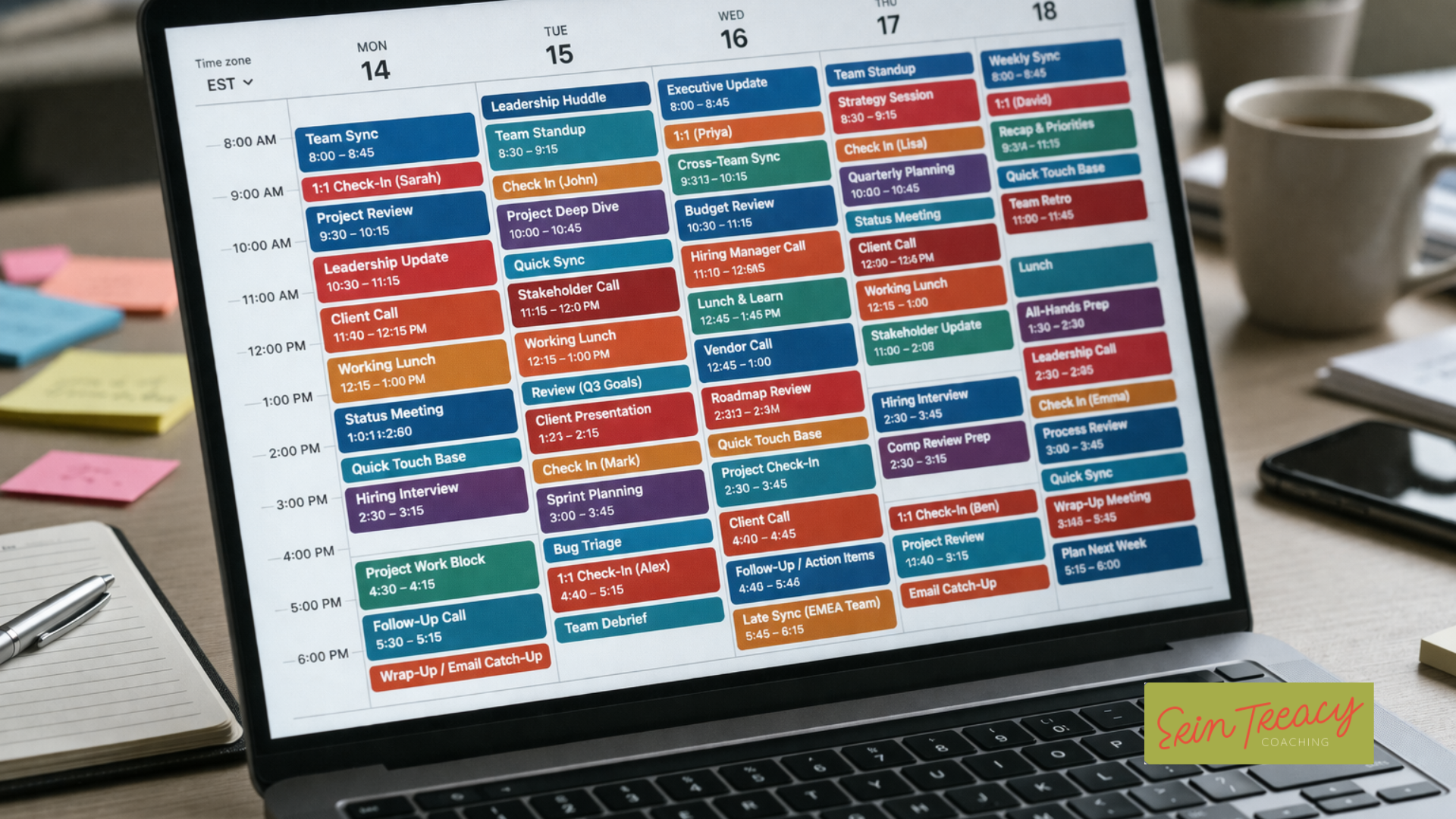
Your calendar already feels like it’s moving at full speed.
Back-to-back meetings.
“Quick” requests stacked on top of each other.
No space between one decision and the next.
The problem isn’t just how much is on your plate.
It’s the speed at which everything is coming at you.
When everything moves fast, you stop deciding.
You start reacting.
That’s how burnout builds.
A speed bump doesn’t stop the work.
It slows things down just enough for you to think.
Two Ways to Install a Speed Bump Today
1. The Response Delay Speed Bump
The next time a request comes in, resist the urge to answer immediately.
Instead, say:
“That sounds important. Let me take a look at my current priorities and get back to you tomorrow.”
This is a speed bump.
It interrupts the automatic yes.
It gives you space to evaluate your real capacity.
It shifts you from reacting to leading.
Most people don’t need better boundaries.
They need a pause before they commit.
2. The Calendar Speed Bump
Look at your calendar.
If every minute is filled, you are operating at full speed all day.
That’s not sustainable.
Block 30 minutes.
Name it something simple like “Weekly Review” or “Project Prep.”
Treat it as non-negotiable.
This is your speed bump inside the day.
Use it to:
-
Step away from constant input
-
Think through what actually matters
-
Reset before the next push
Without this, your day never slows down long enough to make better decisions.
The Shift Most People Miss
Burnout does not come from working hard.
It comes from working without space to think, decide, and recover.
If you wait until you are completely drained to make a change, it will feel overwhelming.
But small changes, done consistently, start to shift how your day feels.
You don’t need to fix everything.
You need to stop the leaks.
What This Means for You as a Leader
When you create even a small amount of space, three things start to happen:
You make clearer decisions
You respond instead of react
You lead with intention instead of urgency
And your team feels that shift.
Because how you manage your capacity teaches them how to manage theirs.
Let’s Talk
If you’re leading a team and feel this daily pressure, you don’t have to keep operating this way.
Start with one small change this week.
Then build from there.
If you’re ready to step out of reactive leadership and create more clarity in how you lead let’s connect.
Frequently Asked Questions
What causes middle manager burnout?
Middle manager burnout is caused by sustained pressure from competing demands, unclear priorities, and limited control over workload. It builds when expectations consistently exceed capacity.
Why do middle managers feel more overwhelmed than other roles?
Middle managers operate between leadership expectations and team needs. They carry responsibility from both directions, often without full authority, which creates constant pressure.
Is this just a boundary issue?
No. Boundaries help, but they are not the root problem. When workload exceeds realistic capacity, the issue becomes structural.
What if I feel like I can’t say no?
Start with a pause instead of a no. A response delay gives you space to evaluate your workload before committing.
Will small changes actually make a difference?
Yes. Small, consistent changes create space for better decisions, improved focus, and reduced stress over time.
