

One of the clearest signs of leadership burnout does not look like exhaustion. It looks like a leader who cannot stop taking work back from her team.
For years, someone would come to me with a question, my child, my spouse, an employee. Instead of answering it, I reached for six words. I’ll just do it myself.
Nobody handed me their work. They came with a question. They wanted clarity, and what they got instead was me, quietly deciding it would be faster, cleaner, closer to my standard if I handled it myself. So I did.
By 11:30 most nights, I sat finishing the work I should have done earlier, because I had spent the day covering everyone else’s. I told myself they had stuck me with it. They had not. I had taken it from them.
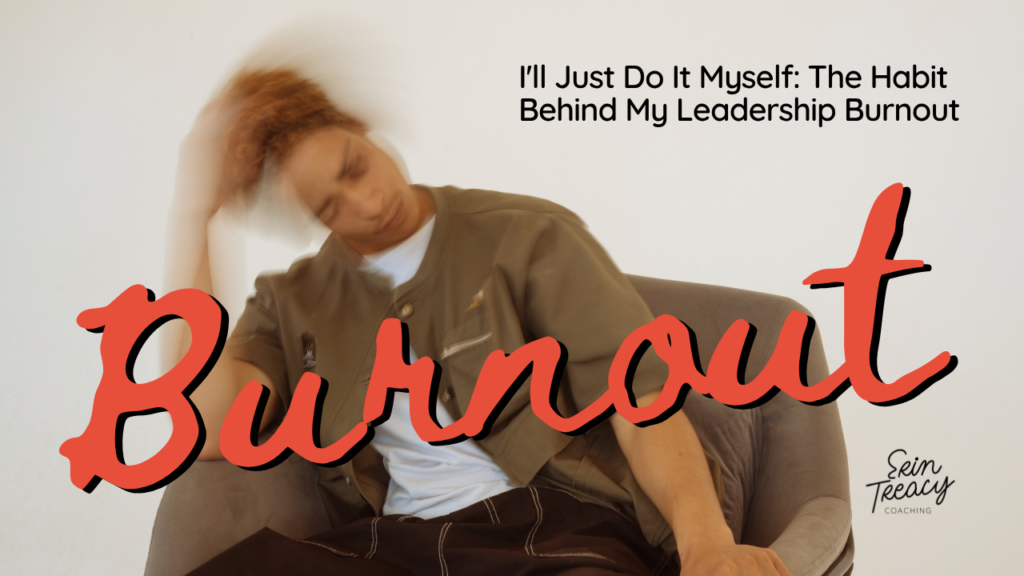
The Habit That Fed My Leadership Burnout
Every time I said “I’ll just do it myself,” the people around me heard something else entirely. You are not good enough. I do not trust you with this.
So they stopped asking for clarity. They started waiting for me to approve, correct, or decide. Proactive had stopped working out well for them, so they quit trying it. The less they stepped forward, the more it looked like proof I had to step in.
This is how leaders cause their own burnout cycle, one small takeover at a time. I built the exact cycle wearing me down, and I could not see it from inside.
Why Experience Makes the Habit Worse
Here is the part few people warn you about. When you carry years of experience, and the person in front of you has thirty seconds of it, handing over the fast answer feels almost responsible. You can solve it faster. You know what good looks like. Why slow down and let someone fumble toward it?
Because fumbling toward it is how they learn to do it without you.
What they needed from me was never the answer. It was a few honest questions.
Explain your thinking. Why did you decide this? How would you evaluate what you did? Here is where I agree, and here is where I see it differently. One or two things to try next time.
This is the whole exchange. No lecture, no takeover, just enough feedback for someone to understand how I read a situation, with enough room left to grow into reading it themselves.
The Squeeze in the Middle
This habit hits middle managers hardest. They carry responsibility for outcomes without full authority to change how the work gets done. A 2026 Harvard Business Review analysis on burnout across the org chart found managers in the middle tend to burn out from carrying responsibility without the authority to match it.
When you cannot change the workload coming down from above, the pressure has to go somewhere. For many middle managers, it gets absorbed the same way mine did, by doing the work myself instead of pushing back or teaching someone else to help carry it.
The Numbers Behind the Habit
This is not just anecdotal. NAMI’s most recent workplace mental health poll found both manager level and experienced employees reporting burnout at 54 percent, compared with 40 percent of entry level workers. The habit of absorbing more than your role requires does not stay contained to the top of an org chart. It shows up wherever someone has enough experience to feel responsible for fixing things.
The American Psychological Association’s most recent Work in America survey found a related pattern. Workers who feel psychologically safe with their managers report far fewer of the outcomes tied to burnout, while workers without that safety report significantly more emotional exhaustion and a stronger sense of feeling ineffective at work. The relationship between a leader and the people below them shapes how much pressure gets absorbed, and how much gets passed down the chain.
The financial toll adds up too. A peer reviewed analysis published in the American Journal of Preventive Medicine estimated employee disengagement and burnout cost a company of 1,000 workers more than five million dollars a year in lost productivity alone. Multiply that across an economy full of managers doing what I did, quietly absorbing work instead of building capacity in the people around them, and the scale of the problem comes into focus.
None of those numbers show up as a line item on your own calendar, though. They show up quietly, inside a single habit repeated so often it stops feeling like a choice. This was true for me too, long before I had a name for what was happening.
The Signs of Leadership Burnout I Missed
This is the part making leadership burnout so hard to catch in yourself. It rarely shows up as one bad day. It shows up as a habit feeling responsible in the moment, only revealing its cost months later, once everyone around you has quietly stopped trying.
Researchers studying burnout in senior roles describe a similar pattern. Warning signs often surface first as negativity spilling into home life. Others describe losing perspective on their broader impact. A peer reviewed review published through the National Center for Biotechnology Information outlines both patterns clearly. Those signs rarely announce themselves loudly. They build quietly, the same way mine did.
I did not see my own cycle until I was forced to pause. Stepping out of the blur gave me room to look back, informed by years spent leading teams before I became a coach, and understand what “I’ll just do it myself” had been doing to me, and to the people I loved and led.
Breaking the Cycle Before It Breaks You
If you are in the middle of this right now, you likely will not see it either. Not because you lack attention, but because the habit was never built to be noticed. It was built to survive a workload outpacing the support around it.
This fall, I am building a workshop for a group of professionals carrying an especially heavy version of this pressure. It is designed specifically for healthcare providers in Huntington, and it will go deeper into these patterns and how to interrupt them. If healthcare is not your field, this post still belongs to you. Leadership burnout does not check job titles at the door, and neither does the habit of doing everything yourself.
For now, here is a place to start. Think of the last time someone brought you a question. Did you answer it, or did you just make it disappear?
One of the clearest signs of leadership burnout does not look like exhaustion. It looks like a leader who cannot stop taking work back from her team.
For years, someone would come to me with a question, my child, my spouse, an employee. Instead of answering it, I reached for six words. I’ll just do it myself.
Nobody handed me their work. They came with a question. They wanted clarity, and what they got instead was me, quietly deciding it would be faster, cleaner, closer to my standard if I handled it myself. So I did.
By 11:30 most nights, I sat finishing the work I should have done earlier, because I had spent the day covering everyone else’s. I told myself they had stuck me with it. They had not. I had taken it from them.
The Habit That Fed My Leadership Burnout
Every time I said “I’ll just do it myself,” the people around me heard something else entirely. You are not good enough. I do not trust you with this.
So they stopped asking for clarity. They started waiting for me to approve, correct, or decide. Proactive had stopped working out well for them, so they quit trying it. The less they stepped forward, the more it looked like proof I had to step in.
This is how leaders cause their own burnout cycle, one small takeover at a time. I built the exact cycle wearing me down, and I could not see it from inside.
Why Experience Makes the Habit Worse
Here is the part few people warn you about. When you carry years of experience, and the person in front of you has thirty seconds of it, handing over the fast answer feels almost responsible. You can solve it faster. You know what good looks like. Why slow down and let someone fumble toward it?
Because fumbling toward it is how they learn to do it without you.
What they needed from me was never the answer. It was a few honest questions.
Explain your thinking. Why did you decide this? How would you evaluate what you did? Here is where I agree, and here is where I see it differently. One or two things to try next time.
This is the whole exchange. No lecture, no takeover, just enough feedback for someone to understand how I read a situation, with enough room left to grow into reading it themselves.
The Signs of Leadership Burnout I Missed
This is the part making leadership burnout so hard to catch in yourself. It rarely shows up as one bad day. It shows up as a habit feeling responsible in the moment, only revealing its cost months later, once everyone around you has quietly stopped trying.
Researchers studying burnout in senior roles describe a similar pattern. Warning signs often surface first as negativity spilling into home life. Others describe losing perspective on their broader impact. A peer reviewed review published through the National Center for Biotechnology Information outlines both patterns clearly. Those signs rarely announce themselves loudly. They build quietly, the same way mine did.
I did not see my own cycle until I was forced to pause. Stepping out of the blur gave me room to look back, informed by years spent leading teams before I became a coach, and understand what “I’ll just do it myself” had been doing to me, and to the people I loved and led.
Breaking the Cycle Before It Breaks You
If you are in the middle of this right now, you likely will not see it either. Not because you lack attention, but because the habit was never built to be noticed. It was built to survive a workload outpacing the support around it.
This fall, I am building a workshop for people carrying an especially heavy version of this pressure. It will go deeper into these patterns and how to interrupt them. If you think you are experiencing burnout, or you know someone who is, this workshop is for you. Leadership burnout does not check job titles at the door, and neither does the habit of doing everything yourself. Learn more here.
For now, here is a place to start. Think of the last time someone brought you a question. Did you answer it, or did you just make it disappear?
FAQ: Frequently Asked Questions
Early signs often include irritability, trouble focusing, or a habit of taking work back from your team instead of coaching them through it. It can look like helpfulness on the surface, while underneath it often signals a leader who no longer trusts the process of letting others learn and improve.
When a leader repeatedly finishes tasks for their team, it can quietly teach people to stop being proactive. The leader ends up carrying more work, not less, while the team waits for approval instead of building confidence, and the cycle reinforces itself over time.
Asking a few short questions works better. Try asking someone to explain their thinking, evaluate their own work, or hear where you agree or disagree along with one or two notes to learn from. It takes a little longer in the moment and saves significant time later.
Yes. Workload matters, but so do the habits built to manage it. A leader who takes over instead of coaching can create a cycle feeding their own exhaustion, even when the original intention behind the habit was simply to help.
