Empowering your Team to Success

Empowering Teams or Enabling Them: Erin Treacy Coaching Blog on Leadership Growth top of page Home About Types of Coaching Leadership & Management Coa...

Erin Treacy

April 30, 2026

Empowering vs Enabling: Could you be holding everyone back?

Managing a business can often feel like juggling various balls, with each one representing a different responsibility or task. But what happens when your team struggles to catch a ball on their own? As a former restaurant owner, I learned the hard way how vital it is to empower your team to make decisions independently.

Consider this scenario: it’s a busy night at the restaurant, the manager is on duty, and suddenly, there’s a shortage of bananas for banana splits. A simple solution could be a quick trip to the nearby store. Yet, instead of taking action, the manager calls me for guidance. In that moment, I felt frustrated. But reflecting later, it became clear: was I too enabling, making my team overly reliant on me?
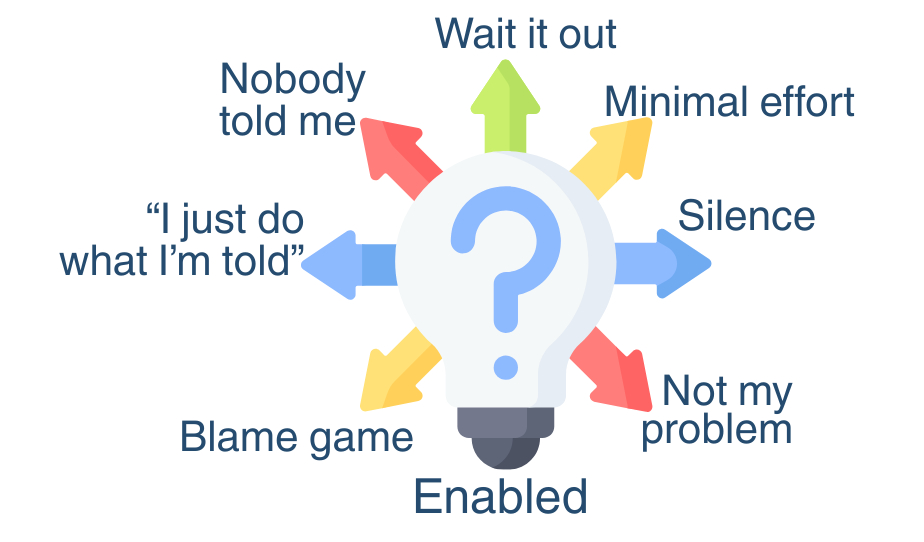
Illustration of how an enabled team culture fosters excuses and blame, highlighting phrases like "Wait it out," "Minimal effort," and "Blame game", which hinder empowerment.

If your team can’t operate independently for even a few hours, it might be a sign that you’re enabling rather than empowering them. When they come to you with routine problems, it’s time to reassess your approach. Empowerment starts now.

Begin with training. When you’re with your team, resist the urge to provide direct answers. Instead, ask, “What do you think I would do?” Often, they already have a solution; they just need some validation.
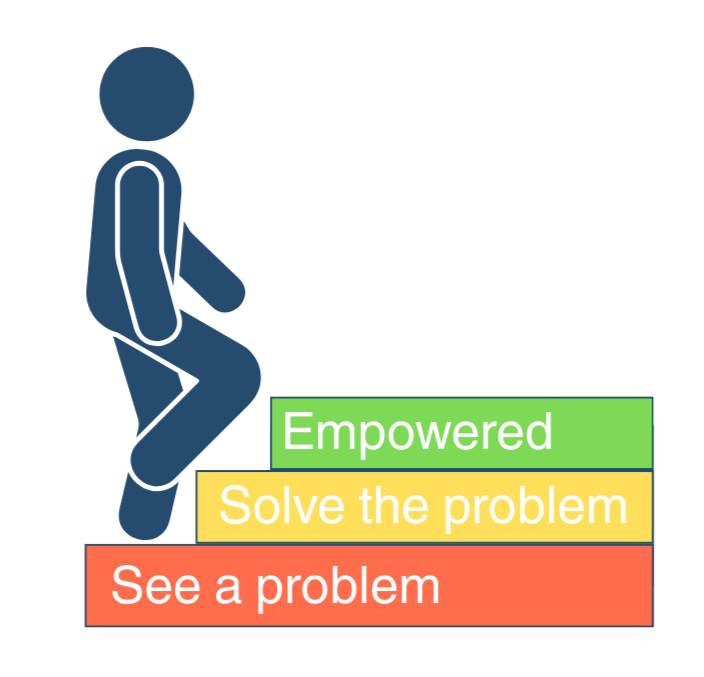
Empowering employees to step in recognize and address challenges fosters proactivity and drives business success.

Empowerment also means allowing your team to fail. Just like learning to ride a bike, falling is part of the journey. After a few spills, riding becomes second nature. Each setback offers valuable lessons that contribute to their growth.

Enabling your team can lead to dependence, which fosters resentment and blame. In contrast, empowerment encourages accountability, enhances communication, and fosters collaboration.

Returning to the juggling analogy, empowerment means you’re not juggling all the balls alone. You have team members ready to share the load.

By trusting your team to make decisions, you not only reduce your stress but also cultivate a more capable and confident workforce. Remember, letting go is essential for growth—both for your business and for you and your team.

Let’s connect and talk more about how Erin Treacy Coaching can help you make the change to empowering your team. Schedule your free one on one today.

Frequently Asked Questions

If your day already feels out of control before your feet hit the floor in the morning, you are likely the kind of person I work with.

You may be a business owner, leader, manager, or professional carrying too much, fixing too much, and feeling like too much depends on you. Erin Treacy Coaching is for people who believe in a people first way of leading and living, and who want stronger communication, better accountability, healthier systems, and a more productive and meaningful life.

This work is for people who are tired of constant reaction and ready for a better way forward.

Coaching is a strong fit when work feels heavier than it should and you know something has to change. Most people reach out when they are tired of carrying too much, fixing the same problems over and over, or feeling like the business cannot move without them.

You may be the bottleneck in your organization. Your team may not be showing up the way you need them to. Performance may feel inconsistent. Communication may break down too often. You may spend more time reacting than leading. By the time the day starts, you already feel behind.

Coaching creates space to slow the frenzy, see what is really driving the problem, and build a better way forward. Sometimes the issue is not the people. It is how the work, expectations, and communication are set up around them. Coaching gives you a clearer view of what is happening, what needs to change, and how to move from constant reaction to steadier leadership.

Servant leadership focuses on how a leader shows up for the people around them. It is about listening, supporting, building trust, and leading with care.

People first coaching includes those values, but it goes further. It also looks at how the business or team is set up for people to succeed. That means roles, expectations, communication, training, accountability, and everyday systems.

In other words, servant leadership often focuses on the heart of the leader. People first coaching looks at both the leader and the environment around the team. A leader can care deeply about people and still have a workplace full of confusion, inconsistency, and stress. People first coaching works to align leadership, structure, and culture so people can perform well without everything depending on one person holding it all together.

Both. Erin works with individuals in one to one coaching and also supports teams through workshops, leadership development, and workplace training.
Yes. Many workplace problems are not caused by a lack of effort. They come from unclear expectations, weak communication, and pressure people have not been taught to manage well. Coaching focuses on building the habits and conversations that create steadier performance and stronger trust.
Yes. Coaching can support people who feel stretched thin, overwhelmed, or stuck in constant reaction mode. The goal is not to push harder. The goal is to create clarity, better decisions, stronger communication, and work habits people can sustain.

A clarity conversation is a safe place to talk honestly about what the frenzy looks like in your work or life right now. This is not a sales call. It is a starting point.

We slow things down, look at what feels out of control, and begin to understand what is really driving the stress, pressure, or frustration. You do not need to come in with polished answers.

The goal is clarity, understanding, and a better sense of what kind of support makes sense from here.

About Erin Treacy

Erin Treacy is a leadership coach and consultant specializing in people-first approaches to professional development. With over 15 years of experience, she helps leaders and organizations build cultures where people thrive and businesses succeed.

If you enjoy the content, we’d love for you to share it with a friend!

INSIGHT

Recent Posts

Overfunctioning: The Weight You Don’t Notice Until You Set It Down

Overfunctioning creeps up slowly. Recognize the invisible weight of carrying too much and find small

Parenting a Young Adult: College Move In Advice for Parents

College move in brings excitement, pride and a new parenting role. Practical advice on letting

Busy Is the New Fine: Why Leading Your Life Is Actually Just Adulting

Leadership is adulting. We fill our calendars with supposed-to-dos to prove we're important, but a