
Walk into any workplace today and you’ll likely find a mix of four generations sharing the same space, screens, and goals. Each brings a story shaped by its time. Baby Boomers are anchored in loyalty, Gen X is built on independence, Millennials are wired for collaboration, and Gen Z, the newest wave, is motivated by meaning and growth.
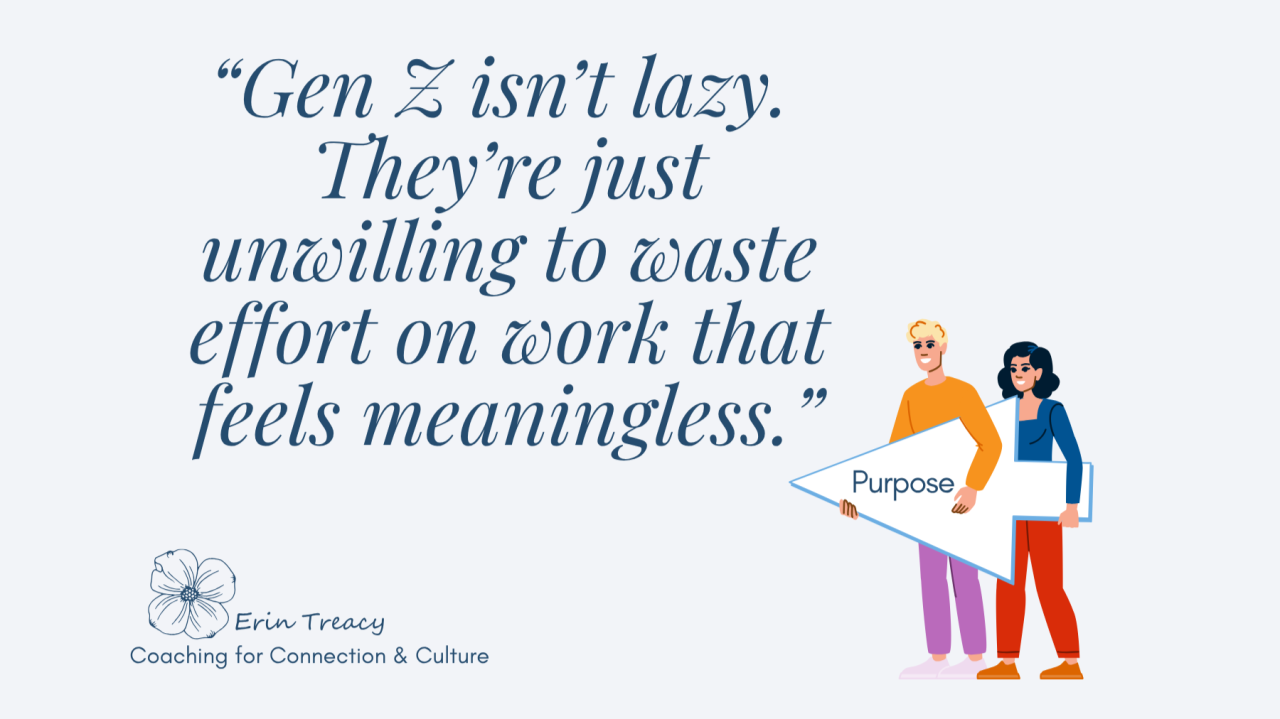
Here’s the truth: Gen Z is not allergic to work. They’re allergic to meaningless work.
They want to know why their effort matters. They want to see where their energy leads. They crave growth and real feedback, not recycled notes.
A Different Starting Line
Most Gen Z employees entered the workforce during years of global disruption and digital overload. They’re the most educated, most connected, and most cause driven generation in history. Yet they also carry the highest rates of workplace anxiety and disengagement when their jobs feel disconnected from purpose.
A 2024 Deloitte survey found 42 percent of Gen Z workers have turned down jobs because they didn’t align with their values. Gallup reports only 35 percent of Gen Z employees feel engaged at work.
Engagement, though, isn’t about perks, it’s about connection. When leaders take time to explain why a project matters and connect daily work to a larger mission, Gen Z responds with creativity and energy.
Small Questions with Big Impact
One of the simplest ways to build real connection is also the most overlooked…asking.
Start with a question like, “What do you want to learn here?”
It tells a young employee you see them as a learner, not a laborer. It also gives you insight into their curiosity which is something you can nurture. When people see a path, even a small one, they find meaning in each step.
Gen Z isn’t lazy they value speed, authenticity, and digital fluency, but their emotional driver is transparency. They don’t expect leaders to have all the answers, they expect them to be honest and human.
Bridge the Gap with EQ
Emotional Intelligence (EQ) is the bridge between intention and understanding. When you pause to listen, reflect back what you hear, and explain the why behind the what, then you’re speaking the language of connection.
A Boomer manager might say, “Let’s stick to what works.”A Gen Z employee might reply, “Let’s try something new.”
Both want success, they just define it differently. EQ helps translate those styles into a shared purpose.
As you model curiosity, transparency, and empathy, you’ll find this generation mirrors it back and then the culture begins to shift.
Gen Z isn’t lazy they are showing us a different way…and they are right.
Gen Z is reminding us of something every generation needs: work is not just a paycheck, it’s a place to grow. Leaders who connect the dots between meaning and growth won’t just retain Gen Z, they’ll re-energize everyone on the team.
Gen Z is changing how we all look at work. If you’re ready to turn connection into retention, let’s create a plan that fits your team.
💡 To learn more on how you can start building a team motivated by purpose, not pressure Book your first 1:1 session with Erin free today at calendly.
Empowering People. Elevating Business.
