

This article explains how leading change affects trust, communication, and team culture. Using examples from sports coaching turnover and business leadership, it outlines what leading change well looks like, what breaks trust during transitions, and how leaders can leave people stronger than they found them.
I’m a sports girl. Always have been. I’m also married to a sports guy, a local sports anchor and reporter. Sports stay on in our house, especially in December.
December also brings constant leadership change. Coaching roles shift across the country at every level.
The pace in 2025 already feels historic. Rules may change around timing and contracts, but the deeper issue remains leadership.
Coaches recruit athletes with promises of growth, commitment, and teamwork. They talk about loyalty and building something bigger than one person. At the same time, some quietly pursue other opportunities. The gap between words and actions raises an important leadership question.
What are people actually learning about leadership during change?
What Does Leading Change Actually Mean
Leading change means guiding people through uncertainty with honesty, consistency, and respect. It requires clear communication, aligned actions, and attention to how decisions affect trust.
Leading change is not about avoiding movement. It is about how leaders show up before, during, and after a transition.
Why Leadership During Change Impacts Trust
Leadership during change impacts trust because people rely on leaders for clarity and stability. When messages shift or information feels hidden, people fill gaps with doubt.
Athletes watch how coaches act during transition. Employees do the same with managers and executives. Trust weakens when people feel surprised, misled, or disregarded.
Trust strengthens when leaders communicate early, explain decisions clearly, and acknowledge impact.
What Sports Reveal About Leadership Transitions
Sports make leadership behavior visible. Coaching changes show how exits teach lessons long after wins fade.
Athletes learn leadership from what they see, not what they hear. When leaders promise commitment but leave quietly, people question the meaning of loyalty. When leaders prepare teams for change, people carry forward confidence and clarity.
These lessons follow athletes into the workplace.
What Leadership Is During Times of Change
Leadership During Change Looks Like
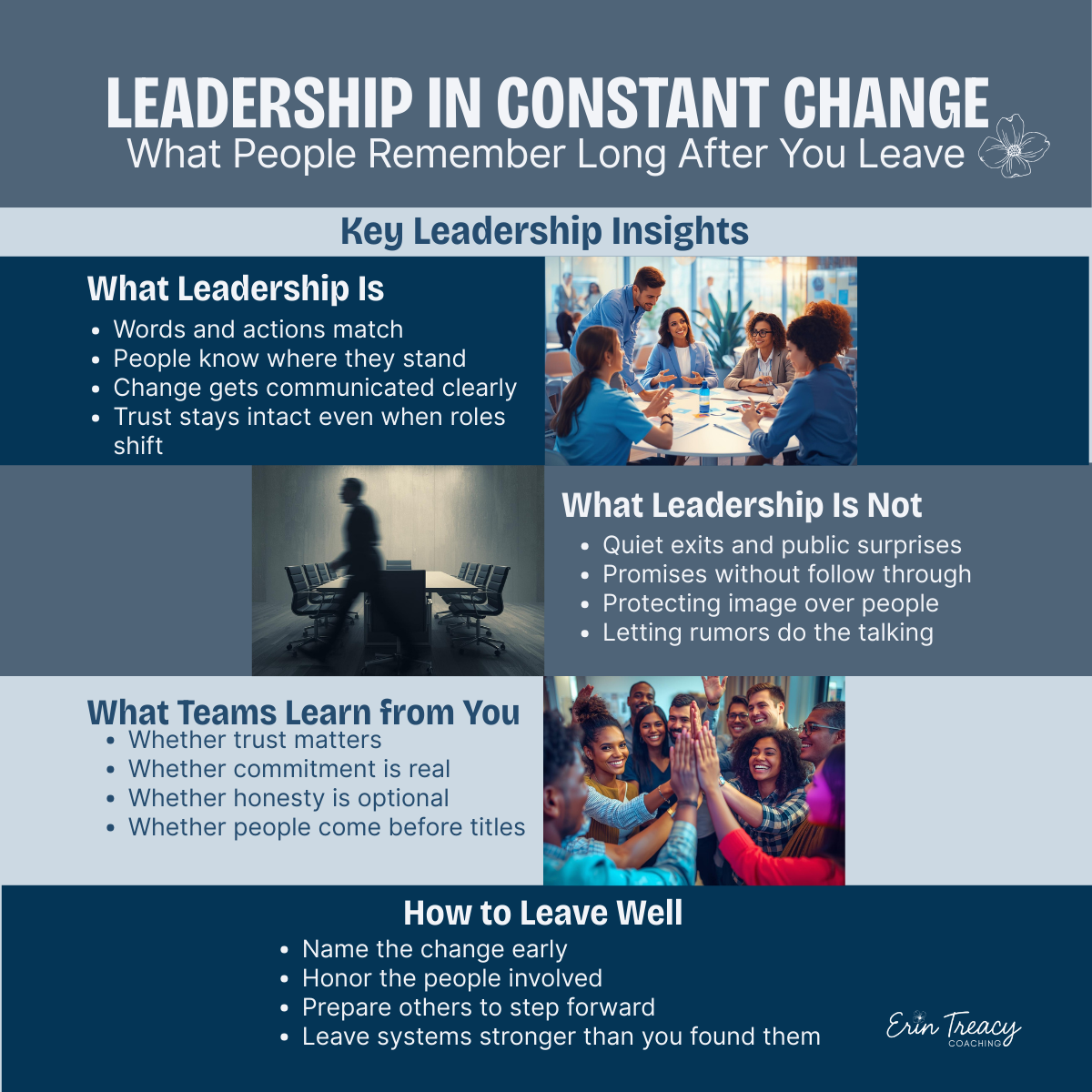
Leadership aligns words and actionsLeadership communicates change clearly and earlyLeadership respects people and relationshipsLeadership prepares others to step forwardLeadership strengthens systems before leaving
What Leadership Is Not During Times of Change
Leadership During Change Is Not
Leadership is not secrecy or silenceLeadership is not protecting image over peopleLeadership is not leaving confusion behindLeadership is not disappearing during discomfort.
How Leaders Lose Trust During Change
Leaders lose trust when communication comes late or feels incomplete. Leaders lose trust when people hear news through rumors instead of directly. Leaders lose trust when promises feel temporary or self serving.
These patterns appear in sports and business alike.
How to Lead Change Without Breaking Trust
Leaders lead change well when they communicate early and clearly. They explain why decisions are happening. They acknowledge uncertainty instead of avoiding it. They prepare people for what comes next. They honor the work and relationships built along the way.
Leading change well means leaving people stronger, not smaller.
What Leaving Well Looks Like in Leadership
Leaving well means naming change before it becomes gossip. It means preparing others for transition. It means strengthening systems so teams continue forward. It means respecting the people who invested trust and effort.
Leaders do not control what happens after they leave. Leaders do control how they leave.
Key Takeaways for Leaders Navigating Change
Leading change teaches more than any speechTrust depends on aligned words and actionsCommunication matters most during transitionPeople remember how leaders leaveLeadership continues even as roles change.
Coaching Perspective and Next Steps
Leading change touches leadership coaching, professional development coaching, career coaching, and personal coaching. Transitions shape confidence, communication, and culture.
If you are navigating change, a promotion, or a possible next step and want to lead with integrity, a Connection Call creates space to talk through what is happening and how to move forward with clarity.
