

I had the pleasure of hearing Chef José Andrés speak this week at Marshall University. Hurricane Melissa had made landfall less than twenty-four hours earlier, and World Central Kitchen was already on the ground in Jamaica.
Chef José spoke about our deep connection to food and how it brings comfort when life feels uncertain. He explained how World Central Kitchen partners with local chefs and restaurants, preparing meals that reflect the food and flavor of the community they serve. Food is familiar, and in moments of crisis, familiarity can offer something powerful. It can give people strength and remind them they are seen and cared for.
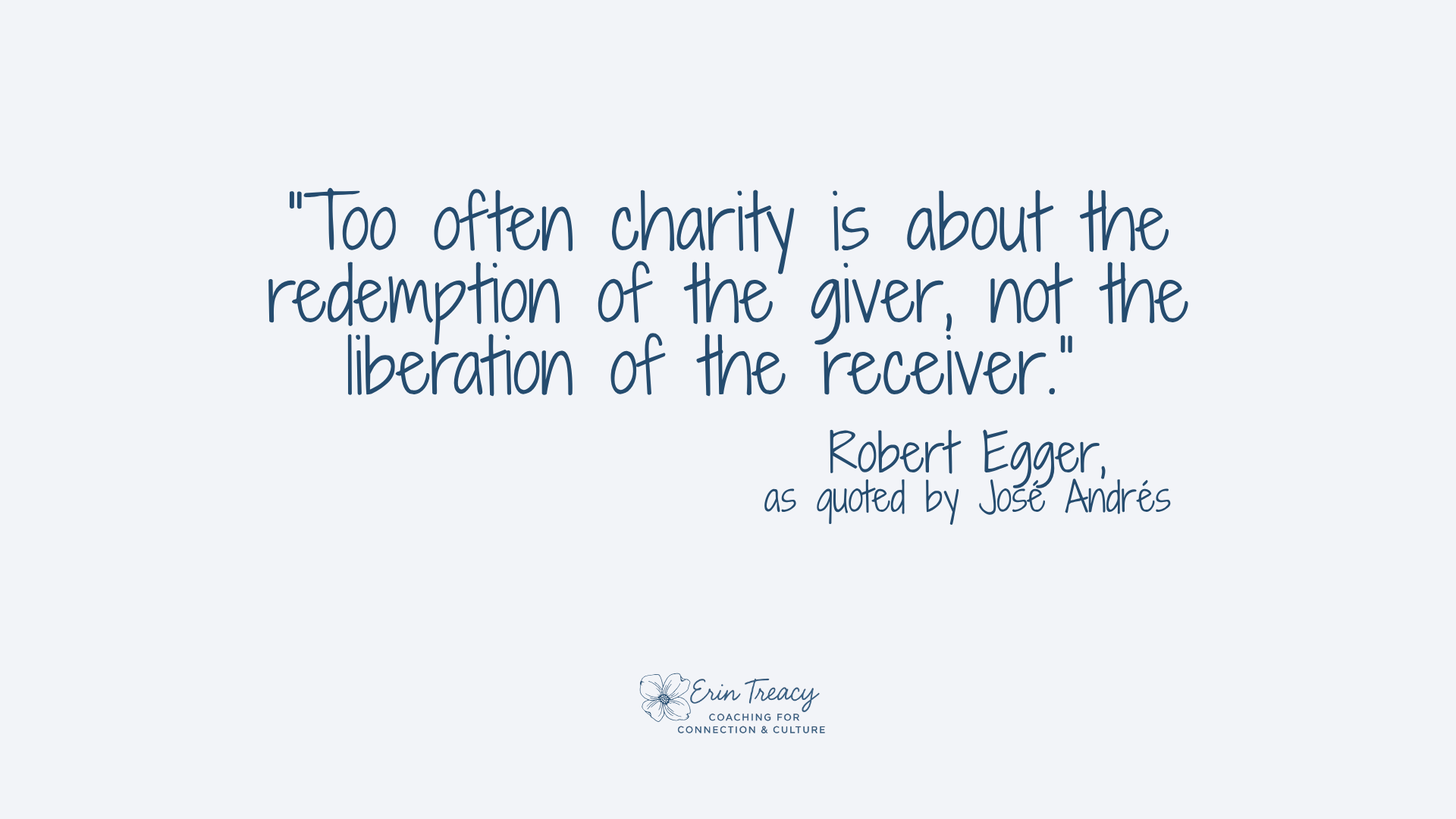
During his talk, he shared the words of his friend Robert Egger, also a chef, who said, “Too often charity is about the redemption of the giver, not the liberation of the receiver.” Those words have stayed with me. They reach beyond service and charity. They describe leadership at its best.
True leadership is not about proving your value. It is about empowering others to see their own. It is about creating a space where people can grow, contribute, and rise with confidence. Leadership, like service, should not focus on redemption. It should focus on liberation—the kind of growth that changes how people see themselves, how they treat one another, and how they shape the culture around them.
The Trap of Feel-Good Leadership
Many leaders fall into what I call the “feel-good trap.” They step in to help because it feels right. They solve problems quickly, give answers before they are asked, or rescue a struggling team member because they want to be supportive. The intention is good, but the outcome is often the opposite.
When we lead from a place of our own redemption, the focus stays on how we feel rather than on what the other person gains. This kind of leadership can create quiet dependency. It tells people, even without words, they need saving. It may fix a problem in the moment, but it does not build confidence for the future.
Empowerment, on the other hand, asks a different question. Instead of “How can I fix this?” it becomes “How do you think we should fix this?”
When Empowerment Feels Like Chaos
Here is the truth many leaders do not talk about. Empowerment, at the beginning, looks messy. It feels slower. It can even make the chaos feel worse before it gets better.
When you hand over responsibility to someone else, it is easy to think, “I can do this faster,” or “If I do it myself, it will be right.” You step in to prevent them from failing or to keep the pace you are used to.
That makes sense. You care about the work and the outcome. But here is what happens when we keep doing it all ourselves. We become the bottleneck, and our people stay dependent. Chaos never leaves, and we probably add more chaos in the process.
Empowering others is not about creating perfection. It is about building capacity. It is about teaching others how to handle the storm so you do not have to stand in it alone.
In the beginning, it feels uncomfortable. You will watch people learn, stumble, and get back up. You will have to sit on your hands and let them find their rhythm. Temporary discomfort is the price of lasting calm. When people know how to think, decide, and act for themselves, chaos fades. Clarity takes root. Culture begins to grow.
From Service to Empowerment
Robert Egger said we must shift from service to empowerment. The same is true for leadership. Service leadership supports, but empowering leadership strengthens. It invites people into growth instead of shielding them from it.
In the workplace, this shift might look like asking, “What do you think the next step should be?” instead of immediately offering a solution. It might mean letting someone present their idea even if it is not perfect or giving a team member room to make a mistake and learn from it.
Empowerment is not about stepping back. It is about standing beside. It teaches people to trust their own voice and judgment, knowing you will be there to guide if they need it. This is how confidence grows and culture changes.
The Ripple Effect of Empowerment
When leaders choose empowerment over control, the results ripple through an organization. People begin to take ownership instead of waiting for direction. Teams collaborate more because they trust one another’s judgment. Confidence grows, communication improves, and innovation starts to show up in unexpected ways.
Empowerment builds culture in the same way World Central Kitchen builds hope—by starting small, one meal, one person, one act of trust at a time. Over time, those moments create something larger than any single effort.
Leadership works the same way. It is less about how much we give and more about how much freedom and belief we inspire in others.
Three Habits to Practice Empowering Leadership
-
Ask before you answer. Give people space to think through a challenge. Curiosity opens doors that advice can close.
-
Coach, do not correct. When you replace control with conversation, you teach people how to find their own solutions.
-
Step back to lift up. Empowerment happens when you stop needing credit and start creating confidence.
Closing Reflection
Empowerment may feel more chaotic in the moment or even like you are losing control. That feeling is normal. When you step back, you give others the chance to step forward. You stop holding all the pieces and start teaching others how to carry them with confidence.
Leadership is not about how much you give. It is about how much confidence, clarity, and courage your giving creates.
The real work of leadership is not cleaning up the chaos yourself. It helps others learn how to lead through it.
If this message resonates with you, take a moment to reflect on your own leadership this week. Where can you let go a little so someone else can grow?
At Erin Treacy Coaching, I work with leaders caught in the chaos of constant change to find clarity, rebuild trust, and lead their teams with confidence. If you are ready to empower others and create calm where there once was chaos, let’s talk.
If you want support bringing this kind of clarity and calm to your team, you can learn more on the Leadership Coaching page or schedule a Clarity Call.
