

Gen Z work readiness looks like a generational attitude problem from a distance. Up close, it is really about fewer hours logged on a job before adulthood, and managers who never got trained either. Here is what closes the gap for both sides.
A young professional I know had been at a job for only a few months. One afternoon they mentioned three trips already booked over the next two months. Flights purchased. Days off never requested. I asked how much PTO they had earned. They did not know. I asked how to request time off. They did not know how, either. The plan was simply not to show up.
I sat with it for a minute. This is Gen Z work readiness in one kitchen table conversation, and it had nothing to do with attitude. Nobody had ever walked this young professional through how adult jobs actually work.
Here is what I told them. Many companies require 90 days on the job before you can take personal time, unless you arranged it during hiring. Onboarding should cover how PTO works and how to ask for it. Notice the word: ask. Not announce.
A small company cannot run with two people out the same week. A good leader will move deadlines around a trip, but only if someone tells them first. If your coworkers stacked their PTO the same way and left their work for you to cover, you would be frustrated too. Time off is earned and worth taking. Just check in before you buy the tickets.
This one conversation stuck with me. It was not really about a single trip or a single kid. It pointed to something bigger playing out in workplaces everywhere.
Gen Z Work Readiness Starts Long Before the First Day of Work
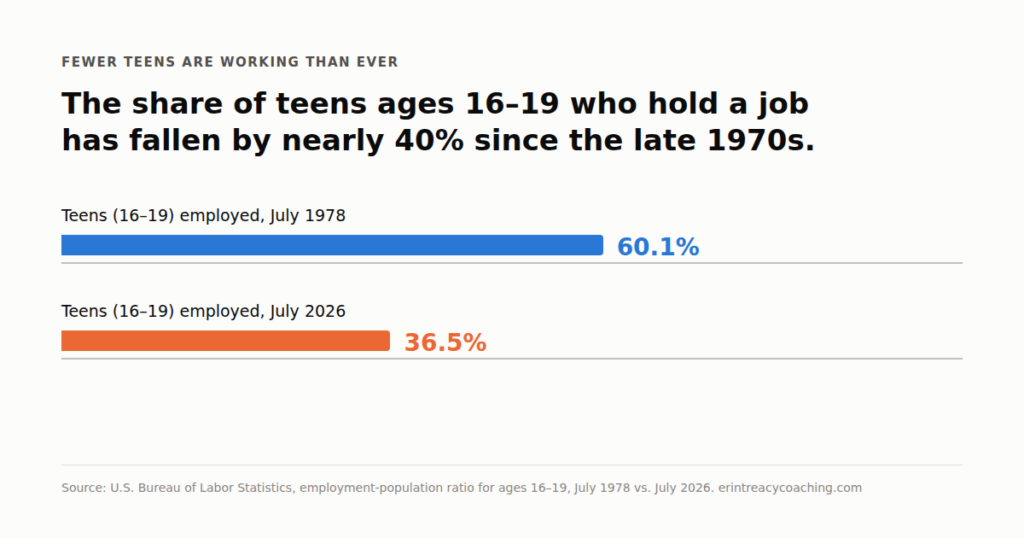
Here is the part almost nobody talks about. This gap has less to do with attitude and more to do with hours logged. Teen employment has fallen from 60.1% in 1978 to 36.5% in 2026, according to the Bureau of Labor Statistics. Fewer teenagers hold a summer job or an after school shift than at any point in decades.
A generation with more years on the clock before 20 built the muscle memory earlier. Showing up on time. Asking for a schedule change instead of texting a friend to cover. Reading a paycheck. Requesting a day off. Those lessons used to arrive at 16, in a job with low stakes. Many people now meet them for the first time at 22, in a job where the stakes are real.
This is not just one family’s story. A 2026 study from the UK’s Chartered Management Institute found the same gap at scale. Forty five percent of young people said they entered work with the skills to succeed. Only 6% of managers agreed.
Both groups are describing something real. One side feels ready because they earned a degree. The other side sees daily habits missing, the ones a job teaches before a degree ever could.
Gen Z Work Readiness Is a Two Way Job, Not a Verdict
Here is a fact I cannot shake. In the same CMI study, 82% of managers earned the title before anyone trained them for it. Ask a manager what young workers are missing and you will hear resilience, communication, feedback. Ask if anyone taught them how, and the answer is usually no.
New employees need real onboarding. So do the people leading them.
Neither side needs a five year plan to start closing it. Two small moves, one for each side, do more than any policy change.
If you lead young workers, start today by writing down the unwritten rules of your team. Note when you expect a reply, how to flag a problem early, and what a normal day looks like. This one page heads off most of the friction an unspoken expectation creates. It is the same pattern covered in Expectations vs. Assumptions. Once the habit sticks, build on it with short, regular feedback, a two minute note on a Tuesday instead of a formal review in December.
The same logic works from the other side. Ask one question in your first week: what does good look like in my first 90 days? This single question does more than any onboarding packet. Once you feel comfortable asking, build on it by treating feedback as information about the work, not a verdict on you. Being coachable explains the mindset well.
Closing the Gen Z Work Readiness Gap
None of this closes the gap by tomorrow. It closes one written expectation, one asked question, and one honest conversation at a time.
Pick one move and try it this week.
If you lead young workers and want help building the coaching skills, feedback habits and onboarding behind this gap, book a conversation with me. We will start with what your team actually needs.
What is one unwritten rule at your workplace nobody ever told you? Tell me in the comments.
FAQ
Gen Z work readiness describes whether young workers arrive with the professional skills a job demands, such as communication, resilience and the ability to take feedback. Teen employment has fallen from 60.1% in 1978 to 36.5% in 2026, so fewer young people get the practice before a full time job.
Say the unwritten rules out loud, such as response times and meeting etiquette. Give short feedback in the first 30 days. Pair each new hire with a mentor. Train the managers who lead them too, since most were promoted without any training of their own.
It depends on who you ask. A 2026 UK study found 45% of young people felt ready for work, while only 6% of managers agreed. Fewer hours worked as teens, not a bad attitude, explains most of the gap.
Yes. Managers who received real training say it changes how they coach and develop younger employees. The bigger problem is how many managers, most promoted without training themselves, never got the chance to build those skills in the first place.
